Engineering & Buyer Guide
Underground Mine Rail Traffic Management: A Block, Authority and Communication Plan
What should an underground mine rail traffic management plan contain?
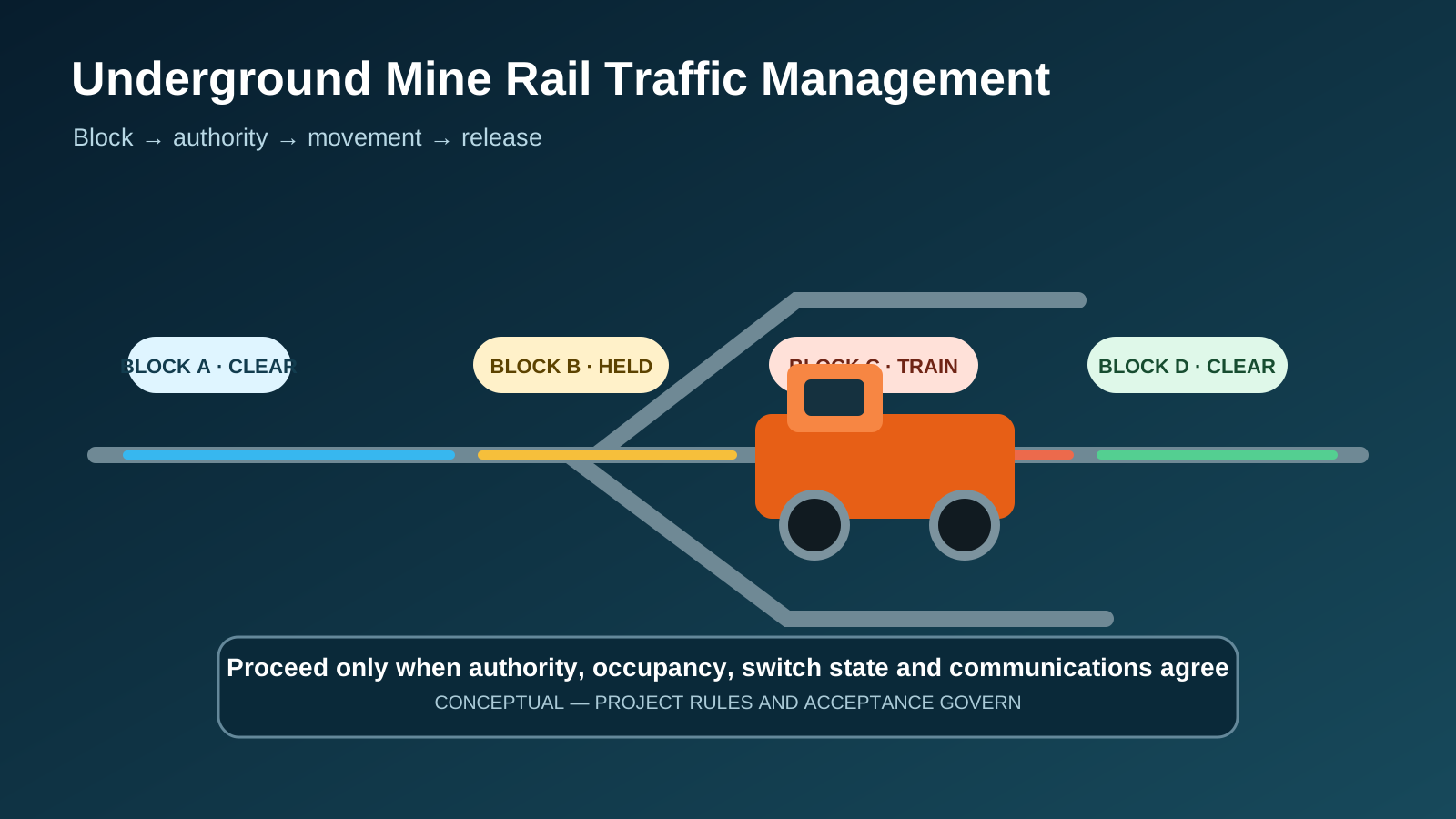
Conceptual traffic-control model: route occupancy, authority, switch state and communications must agree before a movement proceeds.
TL;DR / Direct Answer
What should an underground mine rail traffic management plan contain?
Underground mine rail traffic management is the controlled process that prevents incompatible train, vehicle and pedestrian movements from occupying the same route. Start with a current route map, divide the railway into protectable blocks, define who may issue and cancel movement authority, prove train and switch status, establish primary and fallback communications, and specify what every operator does when information is missing. Technology can support this plan, but a display or positioning tag does not replace operating rules, competent people and tested degraded modes.
Where does the traffic-management boundary begin and end?
Define the controlled railway before choosing signals or software. Include main lines, sidings, loops, loading and discharge stations, workshops, charging or trolley-power areas, crossings, doors, shafts, refuge points, pedestrian access and every interface where another vehicle can enter. Give each route element a stable identifier that is used on drawings, signs, displays, permits, radio calls and event records. A system cannot protect an unnamed turnout or a temporary connection that is absent from its map.
List every movement class: loaded and empty production trains, personnel trains, supply cars, maintenance vehicles, shunting, rescue equipment and people working on or near the track. Record maximum authorized consist and direction by route only after separate traction and braking approval. The traffic plan controls compatible occupancy; it does not calculate whether the train can start, fit, stop or hold on the route.
| Input | Question to close | Controlled evidence |
|---|---|---|
| Route | Which blocks, boundaries, entry points and conflict zones exist? | Surveyed route and asset register |
| Movements | Which train, vehicle, work and pedestrian classes use each block? | Approved operating scenarios |
| Authority | Who can reserve, issue, acknowledge and release a route? | Role and rule matrix |
| Status | How are train location, integrity and switch state proved? | Detection and indication specification |
| Fallback | What happens when location, signal, power or communication is uncertain? | Degraded-mode procedures and tests |
How should blocks and movement authority work?
A block is useful only when its boundaries can be recognized underground and its occupancy can be determined to the confidence required by the operating rule. Fixed blocks may follow signals, switches, stations and single-track constraints. Smaller blocks can improve flow but increase detection, communications, logic and maintenance demands. The longest train, stopping case and overlap assumptions must be considered by competent designers; do not copy a block length from another mine.
Define the complete authority lifecycle: request, route check, switch proof, conflicting-authority exclusion, issue, operator acknowledgement, entry, occupancy monitoring, exit confirmation, release and cancellation. State whether authority is verbal, written, signalled or enforced by control logic. A green indication should never be interpreted without its documented meaning and failure behavior. MSHA's underground powered-haulage material identifies dispatchers and block-light systems as traffic-regulation methods in its US context, while leaving the mine responsible for a workable policy.
- Identify every route conflict and define a visible block boundary.
- Assign one accountable authority source for each operating mode.
- Prove route availability, train clearance and switch position before issue.
- Require a standardized acknowledgement before the train enters.
- Release the route only from positive evidence, not elapsed time alone.
- Record overrides, cancellations and uncertain states for review.
What location and train-integrity information is required?
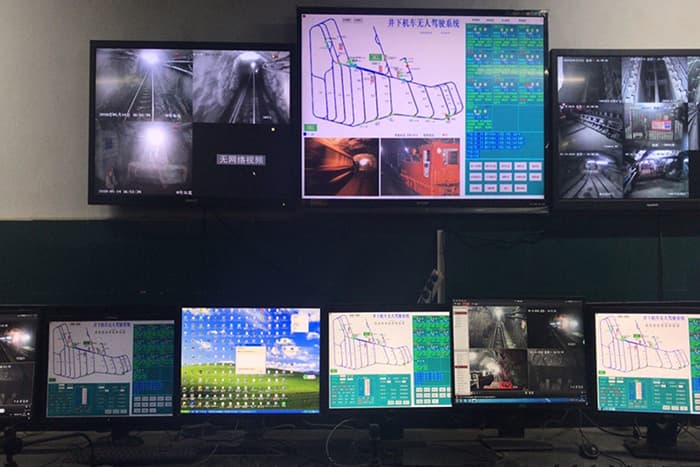
Specify information from the decisions it supports. The dispatcher may need train identity, direction, block occupancy, last confirmed point, consist class and communication health. An automated interlock may also require switch detection, route locking and a quality or confidence state. Do not publish a universal positioning accuracy: the necessary performance depends on block boundaries, vehicle dimensions, route geometry, operating speed and the approved protection concept.
Location of the lead locomotive is not automatically proof that the complete train has cleared a conflict. Define how the last vehicle, split consist, detached car or failed tag is handled. Reconcile electronic status with operating reports and provide a method to establish a known position after maintenance, power loss or database restart. The South African rail-bound equipment guideline treats locomotive, rolling stock and the complete coupled train as related system entities; its jurisdictional scope must remain explicit.
How should traffic communications be designed?
Create a message dictionary before selecting the bearer. Define call signs, route and block names, standard request and repeat-back wording, emergency priority, lost-message handling and the record that proves authority. Separate safety-critical movement messages from production coordination, video and maintenance traffic. Train operators, dispatchers, loading crews and track workers should use the same controlled vocabulary so that a successful radio connection does not still produce an ambiguous instruction.
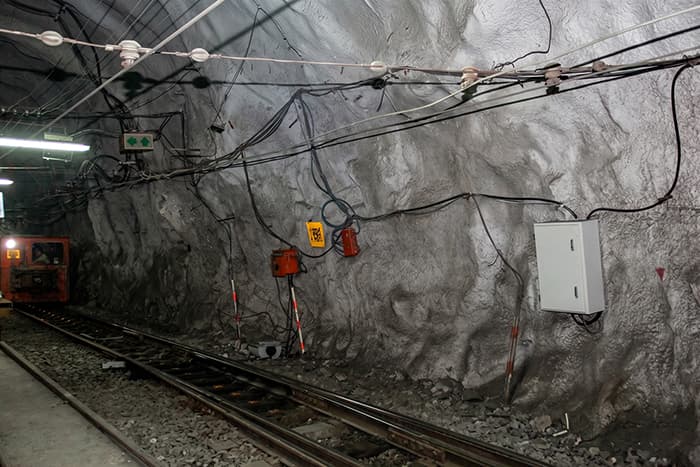
Survey coverage under representative mine conditions and identify interference, shadow areas, power dependencies and equipment damage scenarios. NIOSH material explains that underground communication performance depends on mine geometry and infrastructure and that hardwired and wireless systems have different failure modes. Provide an independent or suitably separated fallback where the risk assessment requires it. If both channels share the same power supply, cable route or control server, they may not be credible redundancy.
Engineering note: Scope boundary: communication technology supports authority; it does not create authority by itself. The mine's approved rules determine who may move, stop, isolate and restore the railway.
How are pedestrians, work parties and temporary changes protected?
Map normal pedestrian crossings, boarding points, workshops and places where people must approach cars, switches or trolley infrastructure. Define physical segregation, warning, access permission and a protected work-block process. A person working inside a route needs a positive protection that cannot be removed by an ordinary production instruction. Include contractors and infrequent tasks; unfamiliar personnel are especially vulnerable to local signal conventions.
Temporary track, blocked routes, construction interfaces and changed traffic direction require a controlled map and rule update before use. Specify who installs and verifies temporary signs, stops, switch locks and communication equipment, how the dispatcher display is changed, and how all affected operators are briefed. NIOSH identifies confined spaces and proximity to moving machinery as important powered-haulage concerns, but the exact controls and access distances remain project-specific.
Which degraded modes must be written and tested?
Create a response for lost communications, uncertain train location, unproved switch, failed signal, unavailable dispatcher, power interruption, obstructed route, split train, stalled consist, emergency access and conflicting database state. For each event state detection, immediate stop or permitted movement, protection applied, communication path, responsible authority, recovery evidence and conditions for returning to normal. A generic instruction to proceed cautiously is not a complete degraded mode.
Keep capacity pressure out of the safety decision. A fallback may reduce the network to one train, one block or escorted movements, and the capacity model should represent that reduction rather than encourage an informal workaround. Test degraded procedures during commissioning and drills using a controlled scenario. Capture alarms, voice or message records, switch and occupancy states, operator decisions and recovery time so the plan can be improved without relying on memory.
| Loss or conflict | Immediate controlled state | Evidence before restoration |
|---|---|---|
| Communication lost | Stop or follow the approved limited-movement rule | Known location and tested channel |
| Location uncertain | Protect affected blocks from conflicting entry | Physical verification and data reconciliation |
| Switch unproved | No authority through the turnout | Inspection, correct indication and route test |
| Dispatcher unavailable | Transfer only under the documented succession rule | Named controller and complete handover |
| Worksite conflict | Withdraw authority and protect people | Work release and independent route check |
What should commissioning and acceptance demonstrate?
Trace each rule and interface to a test. Begin with static checks of map identifiers, signs, switch indications, signals, permissions and communication paths. Then run controlled normal movements, opposing requests, following trains, shunting and work-block scenarios. Inject credible failures without exposing people to uncontrolled movement. Confirm that conflicting authority is prevented, alarms are understandable and restoration requires the expected evidence.
Acceptance records should identify software and map version, vehicle and consist, route, test personnel, instruments where used, initial conditions, expected result, observed event sequence, deviations and approval. The Western Australian historical regulation is a useful example of requiring a mine rail-haulage plan containing layout, operating, maintenance and safety information; it is not a universal legal template. Use the project's current jurisdiction and mine rules.
What should a traffic-management RFQ contain?
Give suppliers the surveyed route and interfaces, movement classes, train formations, operating concept, existing signals and communications, mine network constraints, applicable rules, availability target and required degraded modes. Ask for a requirements-to-function matrix, architecture, coverage method, block and switch logic, cybersecurity and remote-access boundary, event data, maintenance tools, training and staged acceptance plan. Require exclusions and dependencies to be visible.
Compare proposals on controlled outcomes, not the number of dashboard features. Confirm ownership of route data, configurations, event history, backups and diagnostic access. State who maintains field devices and who is authorized to change map or logic. ShaoLi's underground control-system pages can support an initial configuration discussion; final traffic rules, risk decisions and authorization remain with the mine and competent project parties.
- Controlled route, asset and conflict-zone map.
- Movement classes, authority roles and message dictionary.
- Detection, switch, signal and communication requirements.
- Normal, worksite, degraded and emergency scenarios.
- FAT, site integration, acceptance and lifecycle evidence plan.
Frequently asked questions
What is underground mine rail traffic management?
It is the rules, people and technical controls used to authorize compatible train, vehicle and pedestrian movements over a defined underground railway and to respond when route information is uncertain.
Does a mine need a dispatcher for rail haulage?
The responsible authority depends on the approved operating concept. A dispatcher is one method; smaller or automated systems may use other controlled arrangements, but authority ownership must remain unambiguous.
What is a rail traffic block underground?
It is an identified route section whose occupancy and entry are controlled. Its boundaries and length must match the project's train, stopping, detection, switch and operating assumptions.
Is locomotive positioning enough to prevent collisions?
No. The plan also needs train integrity, route and switch state, conflicting-authority prevention, communications, operating rules, people protection and safe failure behavior.
How should radio instructions be confirmed?
Use the mine's approved standard words, block identifiers and repeat-back process, with event recording where required. A message is not authority until the defined acknowledgement is complete.
What happens when the traffic system fails?
Apply the documented degraded mode: protect affected blocks, establish known train and switch status, use the approved fallback authority and restore normal operation only after defined verification.
What data should a traffic-control system retain?
Retain controlled map/configuration versions, authorities, acknowledgements, train and switch states, alarms, overrides, communication health, user actions and restoration evidence according to project governance.
Sources & references
- MSHA Underground Powered Haulage 2021
US regulator training material used for dispatcher, block-light, switch and clear-route prompts; it is not a universal design standard.
- South African guideline for underground rail-bound equipment
Government guideline used for train, infrastructure and system-boundary concepts within its stated jurisdiction.
- Western Australia historical underground rail-haulage plan regulation
Historical jurisdiction example requiring a plan with layout, operating, maintenance and safety content; current project law must be checked separately.
- NIOSH basic wireless communication and tracking tutorial
US research background on underground communication paths and limitations; technology selection remains site-specific.
- NIOSH mining machinery and powered-haulage struck-by research
Current US research context for people-machine interaction in confined mining environments.
Turn the guide into a project requirement
Send the route, train, duty, power, environment and interface data. ShaoLi can review the requirement against relevant product and solution paths without treating a generic guide as a final design.
Request an engineering review