
Engineering & Buyer Guide
Underground Rail Haulage Capacity Planning: A Cycle-Time and Bottleneck Model
How should a mine calculate and validate underground rail haulage capacity?
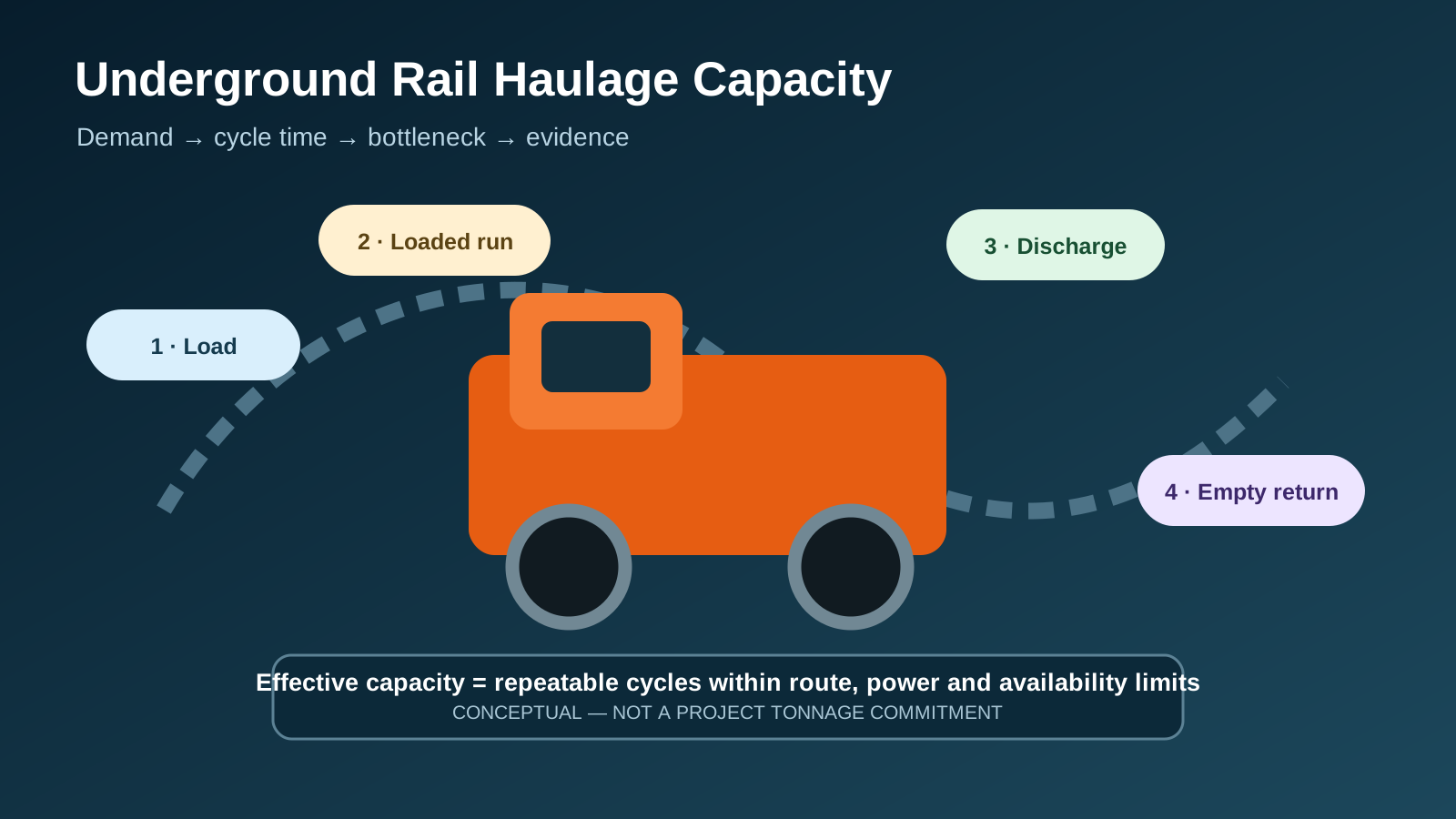
Conceptual planning loop: effective capacity is controlled by the slowest repeatable stage and the variation around it, not a catalogue speed alone.
TL;DR / Direct Answer
How should a mine calculate and validate underground rail haulage capacity?
Underground rail haulage capacity is not locomotive speed multiplied by train payload. Build capacity from the required material movement, approved consist, complete loaded-and-empty cycle, loading and discharge time, route conflicts, charging or trolley-power constraints, crew and control rules, planned maintenance and credible disruption. Test each assumption against measured operating data, identify the true bottleneck, and keep traction and braking verification separate from the production model.
What demand must the haulage system actually meet?
Start with a dated production and logistics requirement rather than a desired locomotive size. Separate ore, waste, supplies, maintenance material and personnel movements because they may use different cars, routes, priorities and time windows. State tonnes or units per shift, operating shifts, peak-hour requirement, source and destination, material density range, loading constraints and expected growth. Identify whether the capacity target is average, scheduled or a guaranteed minimum under defined conditions.
Translate demand into trips only after the approved payload per car and cars per train are established. Nominal car volume is not payload without bulk density, fill behavior and gross-mass limits. Deduct nonproductive or restricted movements and do not assume every trip is fully loaded. A transparent demand register lets procurement, mine planning and operations see whether a shortfall comes from equipment, schedule, infrastructure or the production forecast itself.
| Input | Decision to document | Evidence |
|---|---|---|
| Demand | Material, origin/destination, tonnes or units by period | Approved mine plan and peak profile |
| Train | Car payload, number of cars, tare/gross mass and consist | Rolling-stock and coupling schedule |
| Route | Distance, grades, curves, speed zones, passing and conflicts | Survey and operating route plan |
| Cycle | Load, travel, wait, dump, return and recovery time | Timestamped observations |
| Availability | Planned maintenance, charging, failures and standby policy | Maintenance and operating records |
How is a defensible train cycle built?
Break one complete cycle into observable states: queue for loading, position, load, release, loaded acceleration and travel, controlled stops, route waiting, position for discharge, discharge and confirmation, empty return, crew or control handover, charging or power-related delay and any inspection. Record the start and finish event for each state. Using only end-to-end time hides the stage that must change.
Use distributions rather than one best run. Record enough representative cycles to show normal variation by shift, operator or automation mode, material condition and route state. Keep exceptional incidents visible instead of deleting them automatically; classify whether they belong in routine variability, a degraded scenario or a separate event review. The planning value should be achievable repeatedly under the defined operating rules, not a promotional record.
How do you find the real bottleneck?
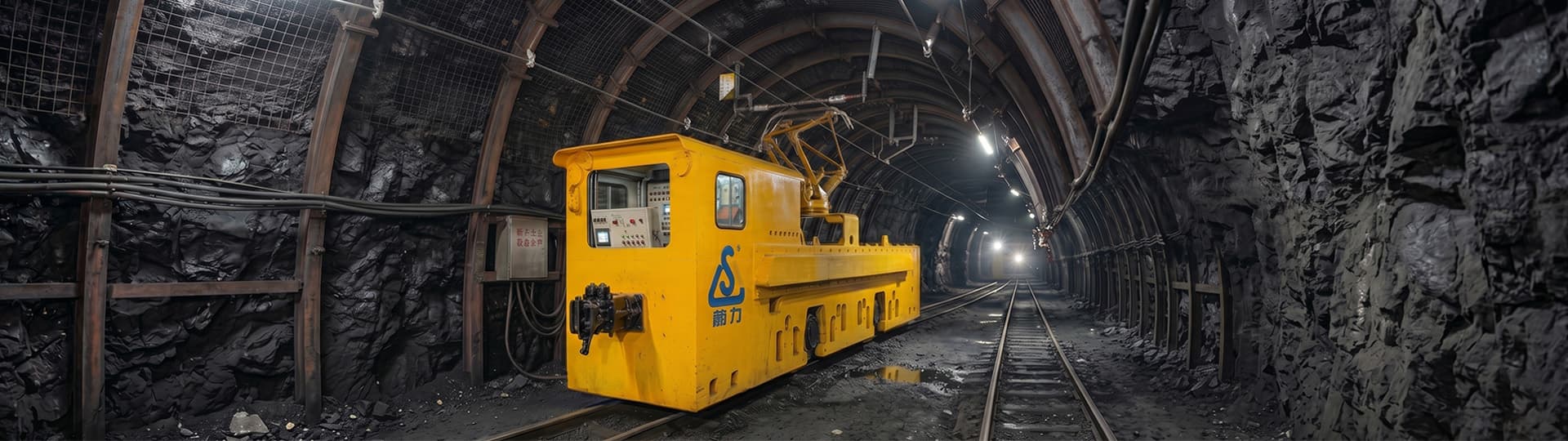
Map every shared resource: loading chute, tip or dump, single-track segment, switch, passing place, door, shaft interface, charger, substation limit, dispatch authority, operator, inspection point and recovery route. A faster locomotive does not raise output if it arrives sooner at an occupied loading point. Calculate utilization and queue behavior at each shared resource and preserve buffer for variability; planning at theoretical saturation usually produces unstable queues.
Test the bottleneck in sequence. First ask whether operating rules or coordination create avoidable waiting. Then consider loading or discharge reliability, route conflicts and train formation. Only after those constraints are visible should the project compare locomotive power, additional cars, passing infrastructure, automation or another train. This order prevents capital from being assigned to the most visible asset rather than the limiting stage.
- Draw the material and train movement from origin to destination and back.
- Assign capacity and availability to every shared resource and route block.
- Overlay measured cycle-time variation and scheduled non-haulage movements.
- Locate the stage where queues form or utilization leaves no recovery margin.
- Test one change at a time and verify the bottleneck does not simply move downstream.
Why are traction and braking separate capacity gates?
The cycle model may propose a train mass or speed, but it cannot approve either. A route-specific engineering check must show that the locomotive can start and move the consist across the ruling gradient, curves and credible rail conditions without exceeding tractive-effort, power, thermal or adhesion limits. Starting force and continuous operation are different questions. Supplier tonnage labels are screening information, not a route calculation.
Braking and holding require their own approved cases using the same consist, direction, speed and gradients. HSE underground locomotive guidance links permissible hauled load to gradient and braking capability, while the South African rail-bound equipment guideline defines trains and static brake tests in its jurisdiction. These are useful system prompts, but the project must use applicable rules, manufacturer information and competent verification. Capacity must be reduced if the proposed consist cannot be safely operated and stopped.
Engineering note: Safety boundary: this guide deliberately supplies no universal adhesion coefficient, stopping distance, gradient limit or train tonnage. Those values require project evidence and jurisdiction-specific approval.
How do battery charging and trolley power enter the model?
For battery locomotives, place actual energy use and charging states on the same shift timeline as trips. Use approved usable energy, arrival state of charge, charge-rate limits, temperature behavior and charger availability. Include travel to the charging location, connection, waiting and release. Model one charger unavailable and any battery held for inspection. A nominal runtime or charge time without the real duty does not establish fleet capacity.
For trolley locomotives, model conductor coverage, supply section capacity, isolation windows, current-collection restrictions and recovery after loss of supply. Loading points, sidings or maintenance areas may create off-wire constraints even when the main route is energized. Hybrid or auxiliary power should be represented only within its approved function. Link the capacity model to electrical maintenance so planned work does not appear as an unexplained production loss.
Which operating scenarios should be tested?
Maintain at least a normal case, peak demand case, maintenance case and degraded case. The normal case uses representative variation; the peak case uses the approved peak profile rather than an arbitrary percentage. The maintenance case removes equipment or route access according to the real plan. The degraded case should cover credible events such as a charger, loading point, train, switch or route block being unavailable and define the approved response.
Sensitivity analysis is more useful than one precise total. Change payload realization, loading time, route wait, speed restriction, charging window, equipment availability and demand growth within documented ranges. Show which variable moves output most and which evidence would reduce uncertainty. This supports staged investment and prevents false accuracy when the mine plan is still changing.
| Scenario | Question | Required output |
|---|---|---|
| Normal | Can the plan repeat with observed variation? | Throughput range and queue profile |
| Peak | Can time-critical demand be cleared? | Peak trips, utilization and buffer |
| Maintenance | What is unavailable by plan? | Reduced capacity and work coordination |
| Degraded | What fails or becomes restricted? | Controlled response and recovery time |
| Growth | Which constraint appears next? | Trigger for fleet or infrastructure change |
How is the model validated after commissioning?
Before deployment, agree event definitions, timestamps, data ownership and reporting intervals. During commissioning and the proving period, compare planned and observed loading, travel, waiting, discharge, return and power-related states. Reconcile payload as well as trip count. Investigate systematic differences and update a controlled model version; do not tune assumptions invisibly until the forecast matches.
After handover, use a small operational dashboard with tonnes moved, completed cycles, median and upper-range cycle time, queue time by location, payload realization, locomotive and infrastructure availability, energy or power exceptions and cancelled trips. Review causes, not only totals. Preserve enough history to distinguish a one-off event from a worsening bottleneck and connect actions to accountable owners.
What should a capacity-focused RFQ contain?
Give bidders the demand profile, material data, route survey, loading and discharge interfaces, approved or proposed rolling stock, operating rules, power arrangement, maintenance windows and scenario requirements. Ask them to return their cycle breakdown, train and fleet assumptions, traction and braking evidence boundary, infrastructure dependencies, exclusions, uncertainty range and acceptance method. This makes proposals comparable without pretending the buyer already knows the final configuration.
Commercial review should separate equipment count from system capacity. Include mine cars, couplers, chargers or trolley interfaces, control and communications, installation, commissioning, spares, training, data access and support. Tie any production commitment to an agreed route, consist, operating window and availability definition. ShaoLi can support an initial locomotive and rolling-stock configuration review; final mine planning, rules and acceptance remain project responsibilities.
- Demand, payload and train-formation schedule.
- Route, conflict, loading and discharge input pack.
- Normal, peak, maintenance, degraded and growth scenarios.
- Assumption, exclusion and evidence register.
- Commissioning data and capacity acceptance plan.
Frequently asked questions
How is underground rail haulage capacity calculated?
Start with approved payload per train and complete repeatable cycle time, then account for route conflicts, loading/discharge limits, availability, power constraints, scheduled work and variability. Validate the result with measured cycles.
Does a faster mining locomotive always increase capacity?
No. Loading, dumping, route blocks, switches, charging and operating rules may be the bottleneck. Higher speed also requires separate traction, braking and route approval.
Should capacity use average cycle time?
An average alone hides variation and queues. Use a representative distribution, defined planning percentile or service level, and preserve a documented recovery buffer.
How many mine cars should be in a train?
Determine the consist from payload demand, car gross mass, couplers, route geometry, locomotive traction, braking, loading/discharge interfaces and applicable rules—not capacity arithmetic alone.
How should battery charging affect fleet size?
Place energy use, charging windows, charger availability and a degraded case on the shift timeline. Fleet size follows the combined operating and charging schedule.
What data should be collected during a proving period?
Collect payload, state timestamps, route waits, power or charging exceptions, completed and cancelled trips, equipment/infrastructure availability and the reason for every material deviation.
Can a supplier guarantee tonnes per hour without a route survey?
A defensible project commitment needs a defined route, consist, payload, interfaces, operating rules, power arrangement and availability basis. Without those, output remains conditional.
Sources & references
- HSE Underground locomotive haulage
Primary UK historical guidance for train, gradient and braking system prompts; jurisdiction and age are explicit.
- HSE Rail track and associated equipment for use underground in mines
Primary UK guidance connecting mine layout, clearances, gradients, curves, payload and journey time.
- South African mandatory-COP guideline for underground rail-bound equipment
Government guideline used for system definitions and risk prompts in its stated jurisdiction.
- RSSB increased freight-train length and tonnage research case
Current non-mining rail research signal supporting route characteristics and resistance-based load modelling; not transferred as a mine result.
- SAIMM underground track design, construction and maintenance
Industry engineering context for underground rail layout and scheduling; not statutory evidence.
Turn the guide into a project requirement
Send the route, train, duty, power, environment and interface data. ShaoLi can review the requirement against relevant product and solution paths without treating a generic guide as a final design.
Request an engineering review