Engineering & Buyer Guide
Underground Rail Haulage Shift Handover: A Train, Route and Defect Status Guide
What must an underground rail haulage shift handover transfer so the incoming team can see the current train, route, defect and worksite state?
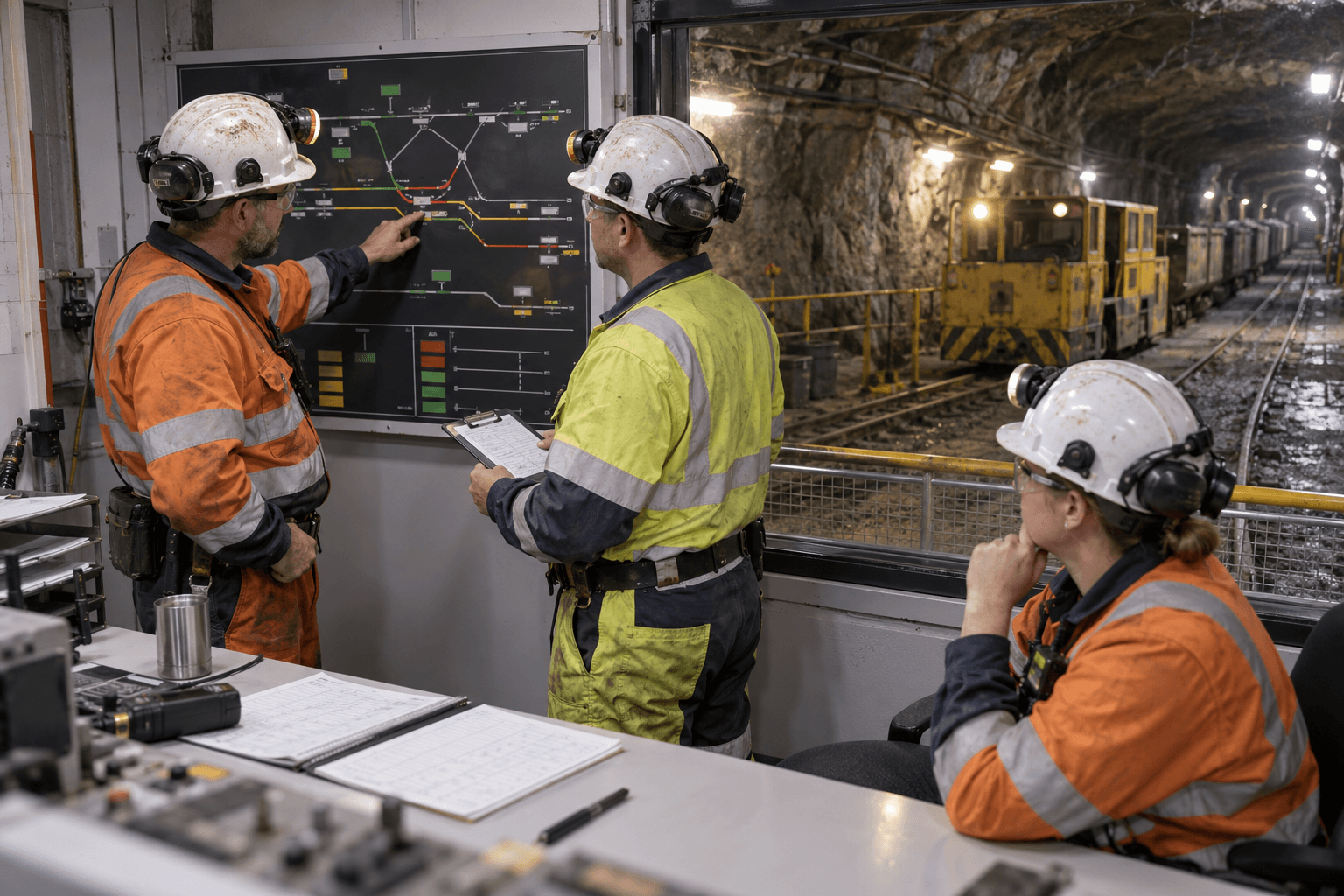
Illustrative industrial scene. It is not a ShaoLi facility, customer site, inventory record, compatibility decision, inspection record or certification evidence.
TL;DR / Direct Answer
What must an underground rail haulage shift handover transfer so the incoming team can see the current train, route, defect and worksite state?
Transfer the operating state, not a stream of messages. The outgoing and incoming shifts should reconcile identifiable trains, route and turnout restrictions, open defects, isolations, temporary work areas, outstanding movements and named actions against one controlled time boundary. The incoming responsible person should acknowledge unresolved items and verify the critical status through the mine's approved process. Handover does not inspect the locomotive, issue movement authority, approve a repair or release equipment to service.
Define the handover decision before designing the form
A handover is complete when the incoming accountable role can identify what is operating, what is restricted or isolated, where people and work interact with the route, which actions remain open and where the supporting record lives. A long narrative can still fail if it omits a train identifier, route section, time, owner or control. Conversely, a concise board can work when every entry points to a controlled defect, work order, movement or restriction record.
Set one handover cut-off time and treat changes after that time explicitly. The outgoing shift remains responsible for the information it records; the mine procedure defines when responsibility transfers and what happens if the incoming role does not accept an unresolved condition. Radio conversation helps clarify, but it should not be the only evidence for a restriction that affects later movements or maintenance.
| State area | Minimum question | Evidence pointer | Incoming action |
|---|---|---|---|
| Train and locomotive | Which identifiable consist is available, restricted, isolated or under work? | Fleet board, defect record or work order | Reconcile identity and stated status |
| Route and turnouts | Which section, switch, clearance or power boundary is changed? | Route register, restriction or permit | Confirm location and control owner |
| People and work | Who is working where, under which protection and until when? | Worksite authority or isolation record | Acknowledge interfaces before movement |
| Open action | What remains to be decided, by whom and by what trigger? | Named action with due event | Accept, escalate or stop through the mine process |
Do not merge shift handover with three other controls
Technical handover transfers the configuration, documents, tests, training and open actions of a project or major change into operation. Pre-use inspection observes equipment and route conditions before a defined movement. Traffic management issues and protects movement authority. Shift handover transfers the current status of those systems between accountable teams. It may point to each record but should not recreate or supersede it.
This separation prevents a signature from being misread. An incoming supervisor acknowledging an open brake defect has not inspected the brake, approved the repair or authorized the train to move. A dispatcher receiving a turnout restriction has not completed the track inspection. The handover record should state the status and the responsible control that governs the next action, leaving technical acceptance to competent roles and movement authority to the approved traffic process.
| Process | Owns | Does not become true at handover |
|---|---|---|
| Technical handover | Configuration and project release package | That the asset is fit for today's movement |
| Pre-use inspection | Defined observations and defect escalation before use | That an open defect is repaired |
| Traffic control | Movement authority, route protection and train separation | That a verbal brief is an authority |
| Shift handover | Current state, restrictions, interfaces and open actions | Inspection, repair approval or equipment release |
Transfer the exact train and locomotive state
Identify the locomotive and, where the control depends on it, the consist. Record location, operating status, power condition, relevant fuel or battery/charging state as defined by the mine, attached cars, known defect references, restrictions, isolation or lockout status, and the next responsible action. Do not use a generic phrase such as available when the train is limited to a route, load, mode or supervised movement.
If a locomotive changed consist, component, setting or operating mode during the shift, link to the approved change or work record. The handover should not decide whether that change is acceptable; it should prevent the incoming team from unknowingly applying an old status. Where the mine uses automated or remote operation, identify the active operating mode and any degraded communications, localization, protection or manual-recovery condition through the system's approved terminology.
- Locomotive and consist identifiers, current location and accountable operator or controller.
- Available, restricted, isolated, under maintenance or awaiting competent decision status.
- Open defect, alarm, work order or temporary instruction reference and its current owner.
- Power, charging, trolley-section or control-system condition needed for the next shift plan.
- Any uncompleted movement, recovery, loading, discharge or stabling action.
Carry route, turnout and temporary-work status into the next shift
A train can be serviceable while its route is not available. Transfer the controlled route section, turnout or traverser status, clearance restriction, drainage or track concern, trolley or feeder isolation, loading/discharge interface, pedestrian access and temporary worksite protection that could affect the incoming plan. Use stable location identifiers instead of descriptions such as near the workshop. Link each item to the route register, permit, inspection or work order that contains the technical detail.
HSE's underground track guidance emphasizes that track, geometry, clearances, drainage and maintenance affect the rail system; the South African rail-bound-equipment guideline likewise treats equipment, infrastructure and communications as connected controls. These are useful categories, not a global handover prescription. Each mine must decide which route state is critical, who may change it and how it is displayed and verified.
Turn every unresolved defect into a visible status and action
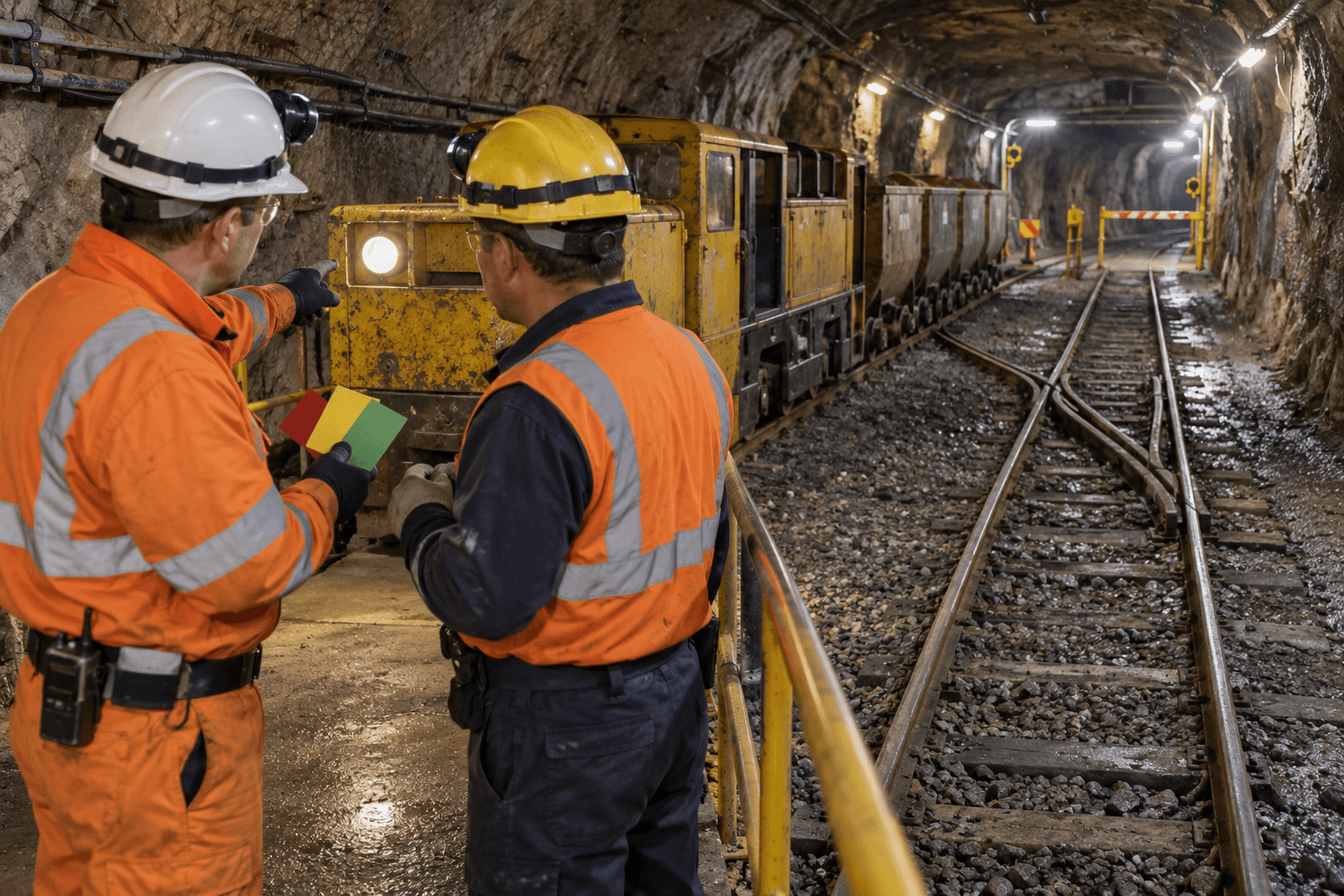
Copying a defect description without its control can make the next shift repeat the diagnosis while missing the operating restriction. Record what was observed, equipment or route identity, time and conditions, immediate action, notification, current restriction or isolation, competent owner, evidence reference and the event required to close or change status. Preserve the observer's wording separately from any later diagnosis.
Use priority terms only if the mine defines them. A red, amber or green marker has no universal meaning and should not decide whether a locomotive moves. A practical board can group stopped or isolated items, controlled restrictions and informational changes, but each category must route to the actual approved procedure. If ownership, location or control is unclear, the handover should trigger clarification or escalation rather than silently carrying the ambiguity forward.
| Board group | State to show | Required pointer | Prohibited shortcut |
|---|---|---|---|
| Stopped or isolated | Asset or route identity and applied control | Isolation, defect or authority record | Incoming acknowledgement as release |
| Restricted | Exact condition, boundary and accountable owner | Approved restriction and review trigger | A vague 'use carefully' note |
| Open work | Worksite, people, protection and expected transition | Permit, work order or route protection | Movement based on radio memory |
| Information | A change that does not itself authorize action | Source and time | Treating the board as a technical instruction |
Use a closed-loop outgoing-to-incoming workflow
Prepare before the overlap period by reconciling the dispatch board, fleet status, defect and work-order systems, route restrictions, isolations and temporary work. The outgoing lead should identify conflicts rather than copying each source separately. During the brief, work from the route and train state, then open each unresolved item and name the owner and next trigger. The incoming lead should question inconsistencies and repeat back items that control the first planned movements.
After the brief, verify the critical state by the method defined in the mine procedure. That may be a system acknowledgement, contact with a worksite owner, a board comparison or a field confirmation; it is not automatically a fresh inspection. Record acceptance, exceptions and the time responsibility transfers. Any change during the overlap needs an explicit update so neither shift assumes the other captured it.
- Freeze the reporting time and reconcile train, route, worksite, defect and isolation records.
- Mark changes since the previous handover and identify conflicts or missing ownership.
- Brief by route and train identity, stating restrictions, open work and next actions.
- Have the incoming accountable role question and acknowledge the unresolved controls.
- Verify critical status through the mine's approved system or field-confirmation method.
- Record exceptions, transfer time and any change that occurs during the overlap.
Close the communication loop without creating a false release
An acknowledgement proves that information was received; it does not prove that the condition is acceptable. Keep the incoming role, date and time, source records reviewed, exceptions and escalations. If a restriction cannot be explained or located, record the discrepancy and apply the mine's stop or escalation rule. Never clear a defect, isolation or route control merely to make the handover board tidy.
Review missed or repeated handover items as system evidence. Look for unstable asset identifiers, conflicting boards, work orders that do not show operational status, shift overlap that is too short, or temporary controls with no owner. Trend categories cautiously and avoid claiming that a small count predicts incident probability. The objective is to improve the information path and accountable decisions, not to create a performance score that encourages under-reporting.
Engineering note: Receipt of information is not movement authority, equipment release, repair acceptance or proof that the underlying inspection was complete.
What should the mine define before implementing a handover form?
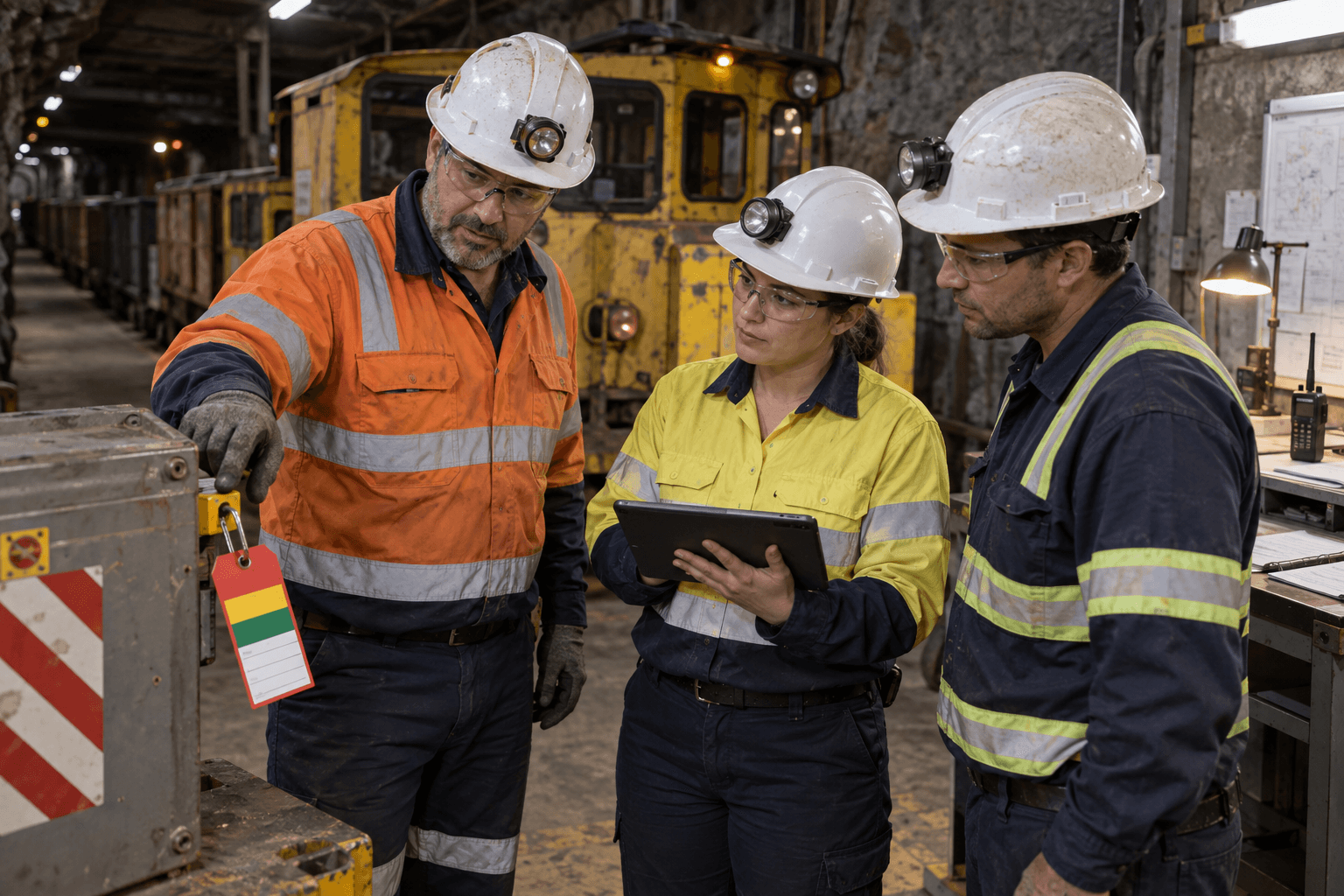
Define the accountable outgoing and incoming roles, overlap and transfer time, route and asset identifiers, source systems, status vocabulary, minimum fields, critical verification method, exception path, retention and review. Design for the underground communication conditions that actually exist. A digital form can still fail when connectivity is poor or identifiers differ; a paper form can fail when updates cannot reach dispatch. The controlled process should explain the primary method and degraded fallback.
For an equipment or solution discussion, provide the route layout, fleet and consist model, dispatch and communication architecture, shift pattern, operating modes, temporary-work process, defect and isolation systems, automation boundary and applicable mine rules. ShaoLi can discuss equipment and transport interfaces using those inputs. It cannot write the mine's legal procedure, appoint its movement authority or approve a shift record for operation.
- Stable route, turnout, locomotive, consist and worksite identifiers.
- Named roles for operations, dispatch, maintenance, electrical isolation and temporary work.
- Defined meanings for every status, restriction and acknowledgement field.
- Links between board entries and controlled defects, permits, work orders and route records.
- A tested fallback for communication or system loss and an escalation for missing information.
- A review method that improves reporting without rewarding hidden defects.
Frequently asked questions
Is a shift handover the same as a locomotive pre-use inspection?
No. Handover transfers current status between accountable teams. A pre-use inspection performs defined observations before use under the mine's procedure.
Does signing the handover release a restricted locomotive?
No. Acknowledgement only records receipt of the status. The competent repair, inspection, return-to-service and movement-authority processes remain separate.
What is the minimum information for an open defect?
Identify the asset or route, observation, time and condition, immediate control, restriction or isolation, record reference, owner and next decision trigger.
Should the handover include route and temporary-work status?
Yes when those interfaces affect rail operation. Use stable locations and link to the controlling permit, restriction, isolation, work order or route record.
Can radio communication replace a written or electronic handover?
Radio can clarify information, but a condition affecting later shifts should be retained through the mine's controlled record process rather than memory alone.
How should automated rail haulage be handed over?
Identify the active operating mode, train and route state, communications and localization condition, protections, degraded modes, interventions and open actions using the approved system terminology.
Does this guide define a legally compliant handover form?
No. The responsible mine must apply its jurisdiction, approved procedures, risk assessment and authority structure. This guide only organizes decision inputs.
Sources & references
- MSHA working-place preshift and on-shift examination summary
United States coal-mine context for time-, location-, condition- and corrective-action records; it is not a universal locomotive handover form.
- South African Government underground rail-bound equipment guideline
South African jurisdictional context for rail-bound equipment, infrastructure, communications and operating controls.
- HSE: Rail track and associated equipment for use underground in mines
United Kingdom guidance on route, clearance, drainage and track maintenance context; the project's approved rules govern.
- NSW Resources Regulator competence evidence including shift handover reports
A specific NSW competence-evidence context supporting accountable authorship; it does not prescribe this underground rail workflow.
- Implats proactive safety reset at Impala Rustenburg
First-party announcement published 27 July 2026; used only to show current operational relevance, not to claim a cause or universal control.
Turn the guide into a project requirement
Send the route, train, duty, power, environment and interface data. ShaoLi can review the requirement against relevant product and solution paths without treating a generic guide as a final design.
Request an engineering review