Engineering & Buyer Guide
Locomotive Technical Handover Documents: A Controlled Release Package for Mine Projects
Which technical documents should a mine receive before releasing a locomotive project to operations and maintenance?
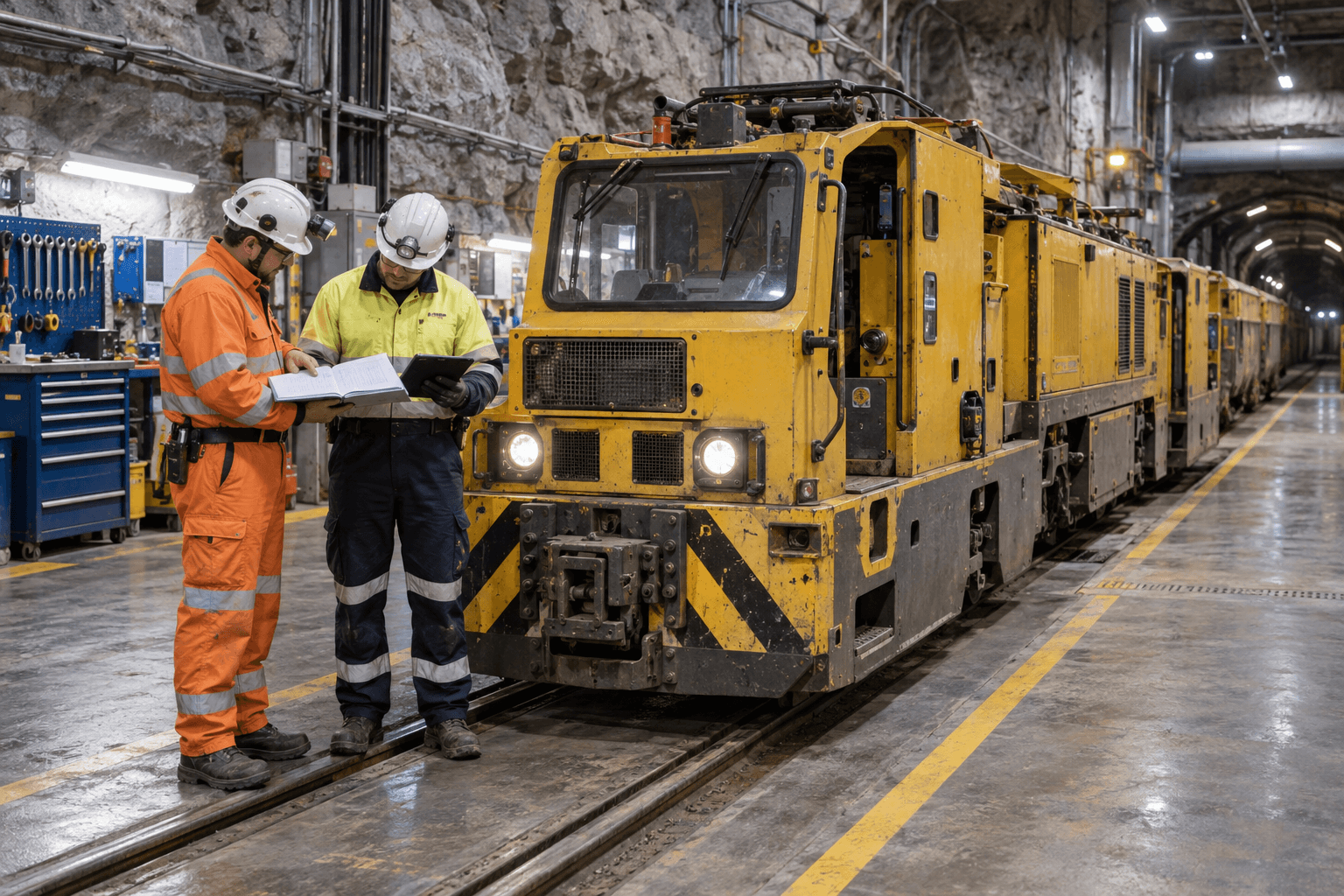
Illustrative planning scene; it is not a ShaoLi factory, customer project, acceptance record or certification evidence.
TL;DR / Direct Answer
Which technical documents should a mine receive before releasing a locomotive project to operations and maintenance?
A defensible locomotive handover is a controlled release package, not a folder of brochures. Freeze the delivered configuration, index the documents against that configuration, record tests and deviations, assign unresolved actions and let the mine's responsible authority decide final acceptance. If the team cannot trace a document to the fitted equipment and its operating boundary, it should be treated as an open item rather than proof of readiness.
Start with a controlled release question
The useful question is not ‘have all documents arrived?’ It is ‘can the project team show what was supplied, which evidence applies to it, what remains open and who may release it?’ A handover package should make that question answerable months later by maintenance, procurement and the mine authority—not only by the original project team.
This guide supports an early project-control conversation. It does not replace the contract, equipment manual, mine rules, risk assessment, applicable regulations or the acceptance process chosen by the responsible mine authority. A commissioning record, supplier declaration or company credential can be valuable evidence, but none automatically proves that a particular fitted locomotive may enter a particular mine operation.
| Question | Useful evidence | What it does not prove |
|---|---|---|
| What was delivered? | Configuration baseline, serial or equipment identity, as-built drawings and revision list | That the mine has accepted the configuration |
| What was checked? | Controlled test, inspection, witness and deviation records | That every future operating condition is safe |
| Who owns the next action? | Action register, responsibility matrix, due date and release authority | That an unresolved item can be ignored |
Freeze the configuration before indexing documents
Create one configuration baseline before handover. It should identify the locomotive, power system, traction motors, controller or software revision where relevant, braking arrangement, couplers, rolling-stock interfaces, electrical enclosures, auxiliary equipment, supplied tools and any site interfaces inside the contract boundary. Use the identifiers that the supplier and project can actually control; do not invent a universal serial-number format.
A document register becomes useful only when each entry points to that baseline. A manual may apply to a family, while a drawing, software release, test result or deviation can apply to a narrower arrangement. Record the issuer, identifier, revision, date, stated scope, source location, reviewer, conditions, exclusions and open actions. A photograph of a document without this context is not a release record.

Use a document register that exposes gaps
The register should distinguish supplied documents from project-produced records. Supplier documents can include approved drawings, operating and maintenance instructions, parts information, configuration lists and declared service requirements. Project records can include installation checks, route or interface verification, witnessed tests, training completion, deviations, acceptance decisions and site-controlled procedures.
Do not use a long document list to hide missing decisions. Give every document a status such as received, under review, accepted for stated purpose, superseded, gap or action required. An item marked ‘received’ is not automatically technically reviewed. An item marked ‘accepted’ should name the purpose and conditions for which it was accepted.
| Register field | Reason to capture it | Example decision it supports |
|---|---|---|
| Configuration linkage | Connects evidence to the actual fitted equipment | Does this drawing match the delivered interface? |
| Revision and issue date | Prevents an old issue being treated as current | Which maintenance instruction is controlled? |
| Scope and exclusions | Shows what the document intentionally does not cover | Who owns the charging or trolley interface? |
| Review status and owner | Makes gaps visible and accountable | Who must close an open deviation? |
| Release condition | Separates evidence from final operational authority | What must happen before use? |
Keep test evidence and deviations traceable
Record the test or inspection purpose, date, configuration, method reference, instruments or inputs where relevant, result, exceptions and responsible reviewer. The aim is traceability, not a generic ‘passed’ statement. For example, an interface check should state which interface was checked and which project conditions were assumed; it should not be restated as a general route, brake or approval guarantee.
A deviation log needs the same discipline. Capture the condition, source, potential affected configuration, proposed disposition, owner, required evidence, decision date and release authority. Closing a commercial punch item is different from accepting a safety- or configuration-related deviation. The applicable mine procedure determines the final approval path.
- Freeze the delivered configuration and identify every supplied and site interface.
- Create the document register with revision, scope, condition and owner fields.
- Link tests, inspections and witness records to the configuration baseline.
- Place every unresolved condition in a controlled action or deviation register.
- Confirm training, maintenance, spare-parts and emergency-information handover responsibilities.
- Obtain release through the project’s approved mine and contractual process.
Engineering note: A release package should preserve uncertainty. Mark an unknown route condition, approval requirement or interface owner as open rather than converting it into a supplier claim.
Use a joint walkdown to connect paperwork to the asset
A handover walkdown lets the mine, project, maintenance and supplier teams compare the configuration baseline with the physical locomotive and its agreed interfaces. It is a good point to verify accessible identity marks, supplied items, obvious interface boundaries, manual locations, spare-parts identifiers and pending actions. The walkdown should generate observations, not replace the required inspection or acceptance method.
Public OEM material illustrates why configuration needs to remain visible. Schalke publishes mining locomotives with application-dependent power modules, gauge and coupling options; Brookville publishes customised underground mining and tunnelling equipment. Those public examples are not evidence for a ShaoLi configuration, but they reinforce the practical reason to keep a project-specific baseline rather than relying on a product-family name.

Transfer maintenance knowledge with the documents
Maintenance handover should identify the current configuration, inspection and service inputs, consumables and controlled spares, diagnostic access, required competencies, tooling, storage conditions and escalation route. It should also identify which values and limits must come from the supplied manual or mine procedure rather than a generic web guide. This avoids a later team treating a broad article or an obsolete sheet as an approved maintenance instruction.
Public after-sales material from Schalke describes a lifecycle that includes commissioning, inspections, service and spares. That is a useful reminder that technical handover is a transition into controlled upkeep, not the end of the project. The actual scope, response obligations and parts availability for a ShaoLi project must remain those stated in its own contract and documentation.
- Current manuals and drawings, with controlled revision status.
- Configuration and component identity needed for future parts requests.
- Required inspections, records and escalation paths from the applicable project documents.
- Site-held special tools, consumables, critical spares and their storage responsibilities.
- Training records, outstanding competency actions and the owner of each action.
- Change-control triggers for later repair, substitution, software or interface changes.
Ask for handover deliverables in the RFQ
Put the expected handover structure into the RFQ before comparing quotations. Ask bidders to name the proposed document types, languages, revision process, configuration identifiers, interface assumptions, factory or site witness options, training deliverables, spares data, change-notification process and items that require mine or third-party input. This turns handover from a late paperwork request into a comparable commercial and engineering requirement.
ShaoLi can use the route, duty, power, rolling-stock and operating-environment inputs to begin a configuration discussion. The final release still depends on controlled project documents, the actual supplied scope, inspections, site acceptance and the responsible mine authority.
Frequently asked questions
Is an operating manual enough for locomotive handover?
No. A manual may be one deliverable, but handover also needs configuration linkage, applicable drawings, test or inspection records, open actions, responsibilities and the project’s release path.
Who should own the handover document register?
The project should assign one accountable owner, while engineering, maintenance, procurement and the mine authority review the fields relevant to their responsibilities.
Can a supplier certificate release a locomotive into service?
Not by itself. Scope, configuration, installation, route interfaces and the applicable mine or jurisdictional acceptance process determine final release.
What is a configuration baseline?
It is the controlled description of the delivered locomotive and relevant supplied interfaces that allows documents, tests, changes and future maintenance records to be traced to the correct arrangement.
How should unresolved handover items be recorded?
Use an action or deviation register with the condition, owner, required evidence, due date, decision status and release authority. Do not hide the item in email or a generic punch list.
When should the handover package be reviewed again?
Review it after a significant repair, substitution, software or protection update, route or power-interface change, incident, relocation or other trigger defined by the project and mine procedures.
Sources & references
- Schalke mining locomotives
Public OEM examples of application-dependent mining-locomotive configuration; not evidence for ShaoLi equipment.
- Schalke after-sales service
Public after-sales context covering planned maintenance, inspections and service support; scope must be confirmed for each supplier contract.
- Brookville mining and tunnelling equipment
Public OEM context for customised underground equipment; no Brookville claim is transferred to ShaoLi.
- HSE: inspection of work equipment
United Kingdom guidance on risk-based inspection, records and evidence; local rules govern the project.
- Transport Canada locomotive specification records
Canadian railway-record context for configuration and modification traceability; not an underground-mine acceptance rule.
Turn the guide into a project requirement
Send the route, train, duty, power, environment and interface data. ShaoLi can review the requirement against relevant product and solution paths without treating a generic guide as a final design.
Request an engineering review