
Engineering & Buyer Guide
Explosion-Proof Locomotive Procurement Evidence: Documents, Scope and Change Control
What documents and scope checks should a mine require before procuring an explosion-proof locomotive configuration?
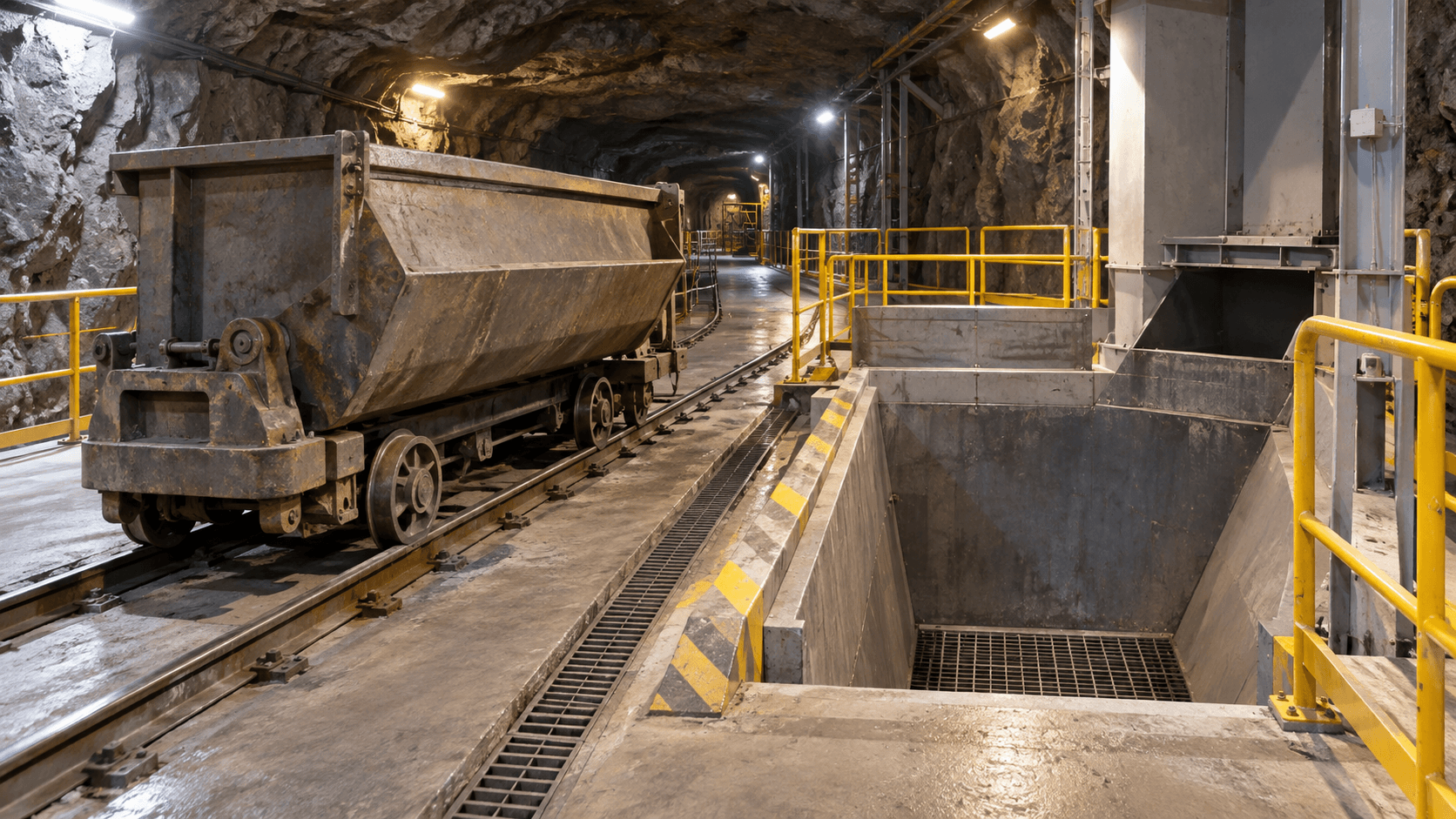
AI-generated illustration — generic staged scene, not a ShaoLi facility, delivered equipment, customer site, certificate, test record or approval evidence.
TL;DR / Direct Answer
What documents and scope checks should a mine require before procuring an explosion-proof locomotive configuration?
An 'explosion-proof' label is not a project approval. Procurement must begin with the mine's responsible classification, jurisdiction, approval route and intended configuration, then ask bidders for traceable documents whose scope matches those inputs. This guide provides an evidence-register and change-control framework for that conversation. It does not classify a hazardous area, interpret legislation, certify equipment or state that any ShaoLi model is approved for a jurisdiction, zone or mine.
TL;DR: a product claim and an approval decision are different
A defensible procurement decision has four controlled parts: the mine's hazardous-area or other applicable classification input, the governing jurisdiction and approval pathway, the exact equipment configuration proposed, and evidence whose document scope matches all three. If any part is missing, report the gap rather than upgrading a marketing term, product family name, generic certificate image or another project's outcome into approval evidence.
Create a document register before comparing bids. It should identify the issuing body, document type, model or configuration scope, markings or conditions exactly as provided, revision, validity or status where available, jurisdiction, interfaces and open actions. The mine's responsible authority must determine what is required. The supplier should state what it can evidence and what remains project-specific. This approach protects both the buyer and supplier from an untraceable promise.
| Question | Evidence owner | Decision boundary |
|---|---|---|
| What environment and jurisdiction apply? | Mine owner / responsible engineering authority | Classification and legal route are site and jurisdiction specific |
| What exact equipment is proposed? | Supplier / procurement | Model family name alone is not configuration control |
| What does each document cover? | Document issuer / supplier | Scope, revision, conditions and interfaces must be checked |
| What proves project acceptance? | Mine authority / project team | Approved project process, inspection and release remain separate from quotation |
Begin with the mine's classification and approval path
Do not ask a supplier to infer the hazardous-area classification from a country, mineral or mine name. The mine should provide the responsible classification input, applicable jurisdiction, authority having responsibility, relevant regulations or standards, document language, installation and operating boundary, and the project stage. If this material is not ready, make that the first action in the procurement plan. A bidder can then explain what additional information is needed without making a site determination it is not authorized to make.
For example, the European Commission describes ATEX as a framework for equipment and protective systems intended for potentially explosive atmospheres in its market scope. In the United States, MSHA's Approval and Certification Center describes its approval work in the mining context. These public pages identify different regimes; neither page makes a particular locomotive or jurisdiction automatically acceptable. IEC catalogue pages can clarify a standard's public scope, but paid text not obtained by the buyer must not be presented as if it had been reviewed.
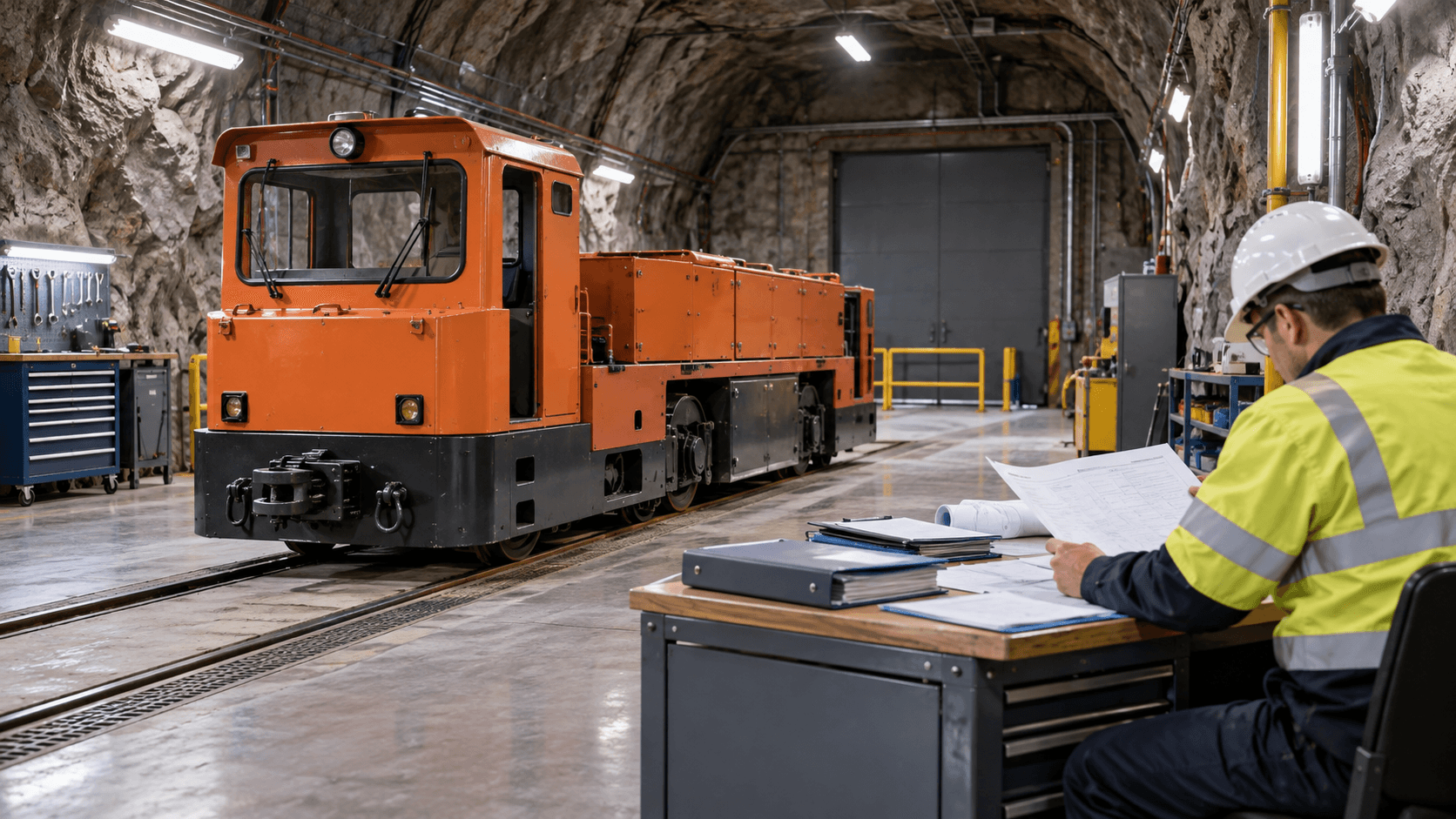
Build a document register, not a folder of claims
A useful register has one row per document and links it to an evidence question. Record document title, issuer, identifier, revision, date, scope as written, equipment identity, associated components, stated conditions or limitations, jurisdiction, source location, reviewer, status and open action. Attach the original or authenticated source where permitted. A screenshot without scope, revision or issuer is not enough for a release decision.
Separate evidence types. A company credential, a quality-system document, a component document, a test report, an instruction, a drawing, a project approval and an acceptance record answer different questions. Do not let one category stand in for another. In particular, a company-level credential cannot prove a specific locomotive configuration is approved, and a product image cannot prove an enclosure, wiring, protection, battery, controller, brake or interface scope.
- Mine-issued classification and jurisdiction input, with responsible authority and project boundary.
- Supplier configuration list: locomotive, power system, controls, enclosures, interfaces and revisions.
- Document scope, issuer, revision, conditions, exclusions and source traceability.
- Installation, maintenance, inspection, modification and operating-document requirements.
- Project acceptance plan, witness points, deviations and final release authority.
Match documents to the actual configuration and interfaces
Treat the proposed locomotive as a configuration baseline, not as a brand label. The baseline should identify fitted power source, controller, motors, electrical enclosures, cable entries, protective devices, batteries or charging interfaces where relevant, braking and control interfaces, auxiliary equipment and installed revisions. Ask the bidder to identify which documents relate to which item and which interfaces are outside supplied scope. An approval or certificate document can be meaningful only in the scope and conditions it actually states.
This matters at interfaces. A locomotive may interact with charging, trolley supply, communications, signalling, loading equipment, maintenance tools and route infrastructure that each have their own project responsibilities. Brookville, Clayton and Schalke publish underground-locomotive or related mining equipment information, but their public material is not evidence for a ShaoLi configuration. Respecting that boundary is not a criticism of any OEM; it is normal configuration control.
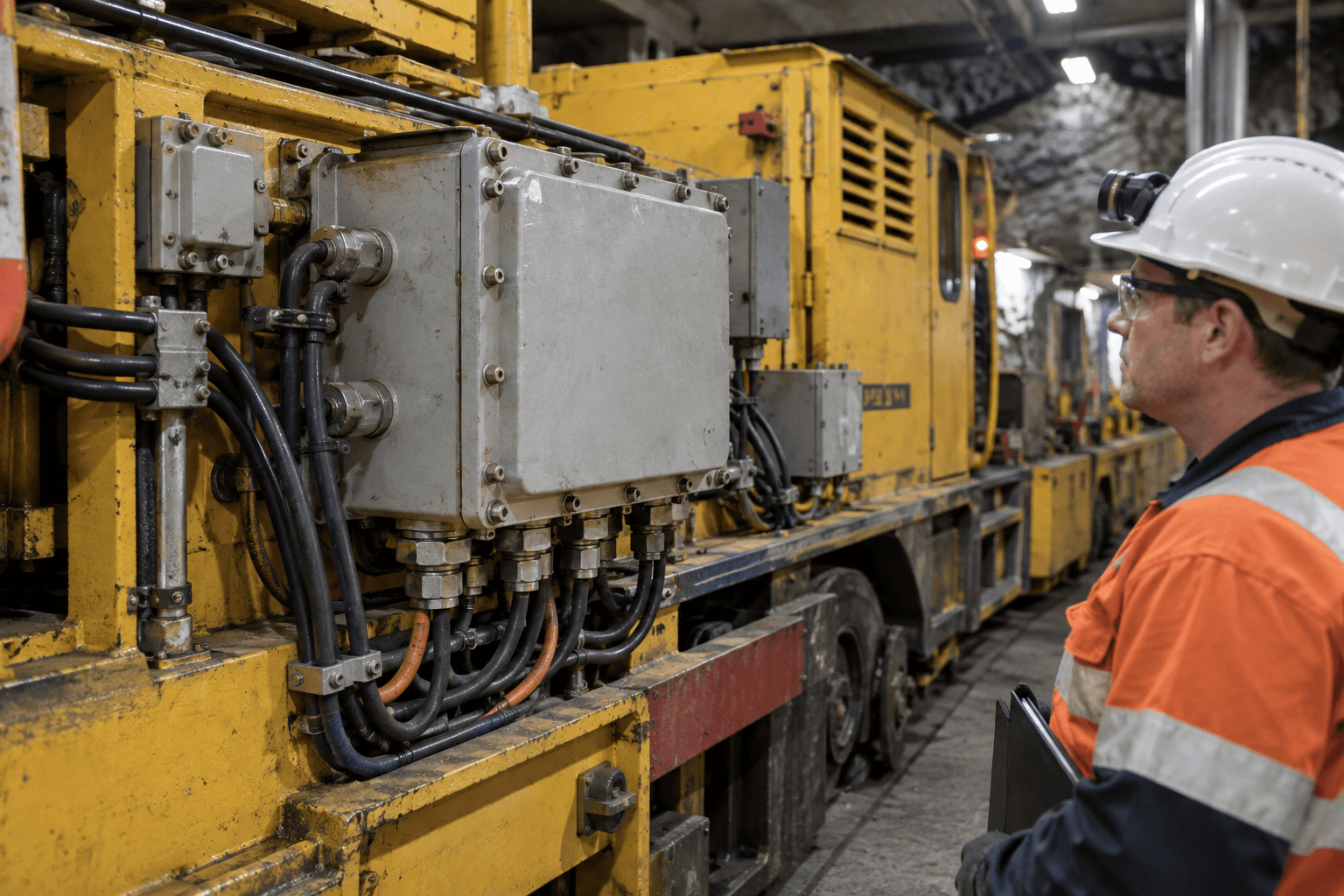
Put change control in the RFQ, contract and handover
A change can affect the evidence basis even if it looks minor. Examples include a different electrical enclosure, cable entry, battery pack, charger, controller software, protection setting, motor, sensor, connector, mounting position, ventilation arrangement, maintenance substitution or route-system interface. The contract should require a written change notice, configuration impact review, document-register update, responsible-site decision and any required re-inspection or acceptance action before the change is treated as released.
Do not assume a part described as equivalent preserves the original document scope. Preserve serial or configuration identity, revision history, reason for change, proposed evidence, review result, conditions and return-to-service authority. This makes a later audit possible and avoids an unsafe shortcut in which an unreviewed modification inherits a former approval statement. The mine's local procedure and authority decide the final process.
Engineering note: Boundary: classification, legal interpretation, installation approval and return-to-service release are responsibilities of the mine and competent authorities for the applicable jurisdiction.
Use a five-gate procurement workflow
This original workflow is a procurement-control sequence, not a certification process. It keeps the site, configuration and document questions visible in the right order. Retain dates, source files, accountable reviewers, unresolved items and decision conditions at every gate.
- Obtain the mine's controlled jurisdiction, classification and project-boundary input from the responsible authority.
- Freeze the requested locomotive configuration and every relevant supplied and site interface.
- Issue a document-register request that asks for scope, revision, conditions, exclusions and source traceability.
- Review gaps with procurement, engineering, safety and the required external or mine authority; do not close them with marketing language.
- Complete project acceptance through the applicable inspection, installation, test, deviation and release process, then control future changes.
Ask bidders for an evidence response they can stand behind
An RFQ should identify the site-provided boundary and ask the supplier to respond against it. Include a configuration schedule, expected documents, language needs, document-review dates, installation and interface responsibilities, spare-parts and substitution process, factory or site witness expectations, support records and change-notification requirements. Do not ask for a blanket statement that equipment is suitable for every hazardous atmosphere; request precise evidence and a list of what requires project confirmation.
Ask the supplier to distinguish available documents from proposed deliverables and to name any required third-party, owner or authority step. ShaoLi's mining locomotive product area may be used to start an engineering discussion, while the credentials and published cases provide company context. Neither should be treated as a claim of configuration-specific approval. The related commissioning and trolley-power guides help the buyer preserve interface and acceptance evidence once the project scope is defined.
| Package item | Why it matters | Status field |
|---|---|---|
| Mine boundary statement | Prevents a supplier from inferring jurisdiction or classification | Issued / draft / action owner |
| Configuration baseline | Links evidence to actual locomotive and supplied interfaces | Revision and item identifiers |
| Document register | Makes scope, issuer, conditions and gaps reviewable | Received / verified / gap |
| Interface matrix | Separates supplier, mine and third-party responsibilities | Owner and acceptance input |
| Acceptance and change plan | Prevents quotation evidence becoming uncontrolled release evidence | Witness, deviation and release authority |
Handover evidence should remain usable after procurement
At handover, retain the configuration baseline, approved drawings, document register, installation and inspection records, applicable instructions, test evidence, deviations, training or maintenance requirements, spare-parts identities and change-control history. Index the files so a maintainer can determine which configuration and evidence applied at release. A durable record matters more than a broad procurement declaration because people, components and mine conditions can change over the equipment lifecycle.
Set review triggers at installation, relocation, changed route or power interface, repair, component substitution, software or protection update, incident, regulatory change and periodic project review. The accountable mine authority decides if the evidence still supports operation. If the team cannot demonstrate scope and configuration continuity, it should pause the assumption and seek the required competent review rather than relying on an old certificate image.
Frequently asked questions
Does the term explosion-proof prove that a locomotive is approved for my mine?
No. Project acceptance depends on the mine's classification, jurisdiction, exact configuration, document scope, interfaces and responsible approval process.
Who should classify a hazardous area for procurement?
The mine and the competent responsible authority for the applicable jurisdiction must provide the controlled project input. A supplier should not infer it from a broad site description.
Can a company certificate prove product approval?
No. Company credentials and product or configuration evidence answer different questions. Review each document's issuer, scope, revision and conditions.
What should a procurement document register include?
Include title, issuer, identifier, revision, date, stated scope, equipment/configuration linkage, conditions, jurisdiction, source, reviewer, status and open actions.
Why must the configuration baseline be frozen?
A document may apply only to a named combination of components or conditions. Uncontrolled substitutions or revisions can invalidate the assumption that earlier evidence still applies.
When should evidence be reviewed again?
Review it after configuration, electrical, enclosure, battery, controller, protection, interface, installation, repair or regulatory changes that may affect the documented scope.
What proves final project acceptance?
Only the applicable mine and jurisdictional process can do that, using the approved configuration, required inspections, tests, deviations and release authority.
Sources & references
- MSHA Approval and Certification Center
United States mining approval context; not a statement about a particular product.
- 30 CFR 18.80
Public United States regulatory text; applicability must be confirmed for the project.
- European Commission ATEX
European market framework context; not a project classification or approval result.
- IEC 60079-7 catalogue record
Public catalogue scope only; this article does not claim to interpret the paid standard text.
- Clayton Equipment downloads
Public OEM documentation context; no Clayton evidence is transferred to ShaoLi equipment.
Turn the guide into a project requirement
Send the route, train, duty, power, environment and interface data. ShaoLi can review the requirement against relevant product and solution paths without treating a generic guide as a final design.
Request an engineering review