Engineering & Buyer Guide
Underground Rail Route Survey Checklist: Evidence Before Haulage Design
What evidence should a mine collect in an underground rail route survey before haulage design?
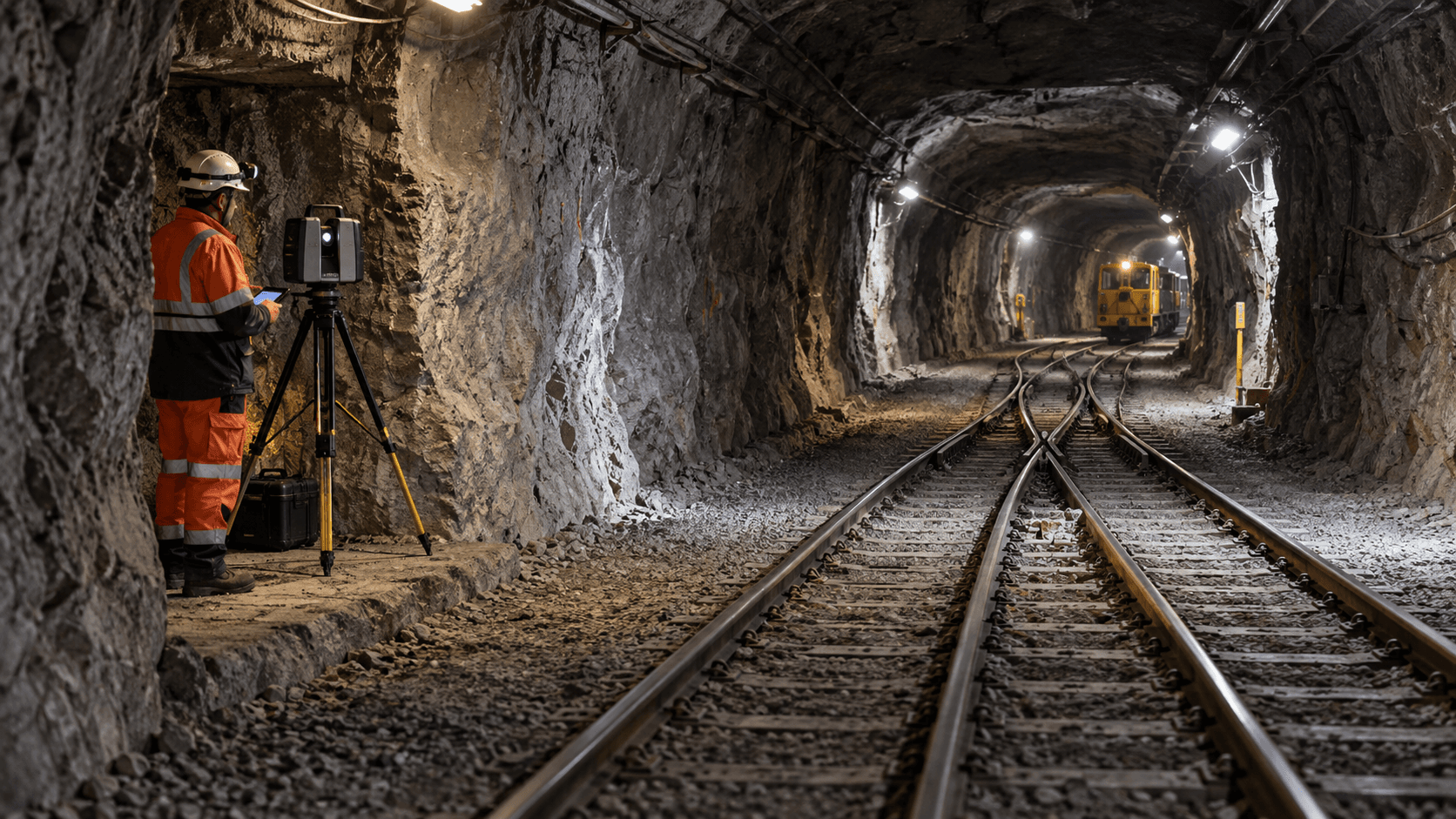
AI-generated illustration — generic staged scene, not a ShaoLi facility, delivered equipment, customer site, measured result or performance evidence.
TL;DR / Direct Answer
What evidence should a mine collect in an underground rail route survey before haulage design?
Before a mine asks for an underground rail-haulage configuration, it needs a dated route-survey package rather than a single tunnel width or track gauge. Survey the alignment and elevation, clearances, gauge, curves, turnouts, drainage, support, crossings, services, work areas and temporary constraints; then state how each item was measured and what remains unknown. This checklist is for design and procurement input. It is not an in-service track-inspection procedure, a compliance certificate or a substitute for the mine's survey control and local rules.
TL;DR: survey the route as a design interface
A useful survey package lets engineering compare a proposed haulage system with the actual route, not with a remembered tunnel shape. It should connect a route identifier to horizontal and vertical alignment, gauge, clearance envelope, curves, turnouts, drainage, support, track condition, interfaces and restrictions. Every observation needs a source, date, coordinate or chainage reference where used by the project, method, accuracy or limitation, and a change owner.
Do not confuse this upfront evidence package with the recurring defect inspection needed after a railway enters service. The route survey asks what must be designed around and what uncertainty remains. The track-inspection plan asks whether a defined route remains fit for its approved operating envelope. The same physical feature can appear in both systems, but its decision and record are different.
| Route evidence | Why a buyer needs it | Decision it supports |
|---|---|---|
| Alignment, grade and chainage | Shows where a route changes direction or elevation | Locomotive, train, drainage and construction interfaces |
| Gauge, rail, curves and turnouts | Defines running-gear and movement interfaces | Vehicle envelope, wheelset, consist and switching review |
| Clearance and support envelope | Shows physical conflicts above, beside and around the route | Vehicle body, load, power, walkway and service placement |
| Drainage and ground condition | Makes water, debris and maintenance access visible | Track support, work sequencing and operating restrictions |
| Temporary works and services | Records changing construction or production constraints | Staging, isolation, access and revision control |
Set control, scope and limits before fieldwork
Define the purpose before choosing the measurement density. A feasibility route walk, procurement survey, installation set-out and final as-built record need different control, accuracy and sign-off. State the route limits, reference system, survey control source, measuring method, responsible surveyor, access conditions, equipment restrictions and safety controls. If another contractor or mine department supplied the base drawing, record its revision and whether it has been field-verified.
The NSW Resources Regulator explains that statutory mine survey plans have defined requirements in its jurisdiction. That source is useful for understanding the importance of controlled survey information, but it does not make a New South Wales process applicable elsewhere. The correct jurisdiction, mine type, project contract and responsible survey authority must be identified before relying on any rule. If control or access prevents a field observation, show the gap rather than drawing a false certainty.
Record alignment, grade and geometry as a connected route
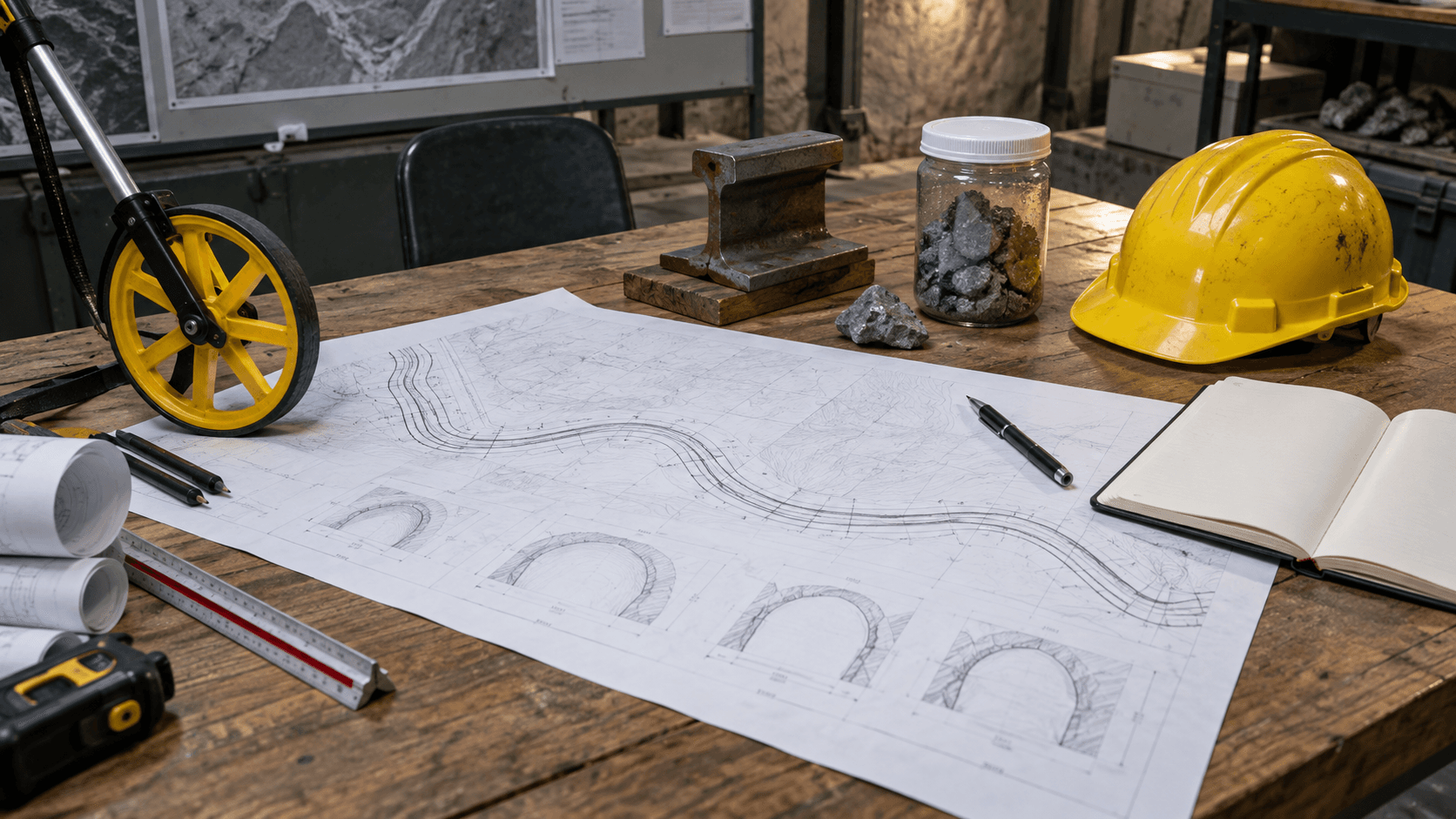
Capture the route centreline or project reference, elevation profile, direction of travel, grades and vertical transitions in a format the design team can trace. Pair these with horizontal curves, reverse curves, turnout locations, siding entries, loading and discharge points, crossings and transition areas. Include chainage or another controlled route reference so a clearance observation can be linked to the same place as a drainage issue or a temporary restriction.
Use the survey evidence to identify candidate ruling locations, not to announce equipment capacity. A steep section, constrained curve or turnout can influence train and vehicle review, but the final answer also depends on the proposed locomotive, rolling stock, load, power, wheel–rail condition, braking and local operating rules. The related tractive-effort input guide explains how the route record should connect to a train and duty package without inventing a generic hauled mass.
- Name the route segment, travel direction and reference point used by the project.
- Record horizontal and vertical alignment sources, grade changes and curve or turnout limits.
- Identify loading, discharge, crossing, refuge, maintenance and recovery interfaces.
- State whether each observation is field-measured, drawing-derived, reported or still unverified.
- Preserve the date, revision and reason when a route condition changes.
Survey the clearance envelope, not only tunnel width
A single width dimension does not describe the available running envelope. Record the rail reference, side clearances, roof profile, support type, walkways, drainage channels, cables, pipes, ventilation ducting, signals, overhead power where applicable, doors, niches and temporary installations. Where a future load can project beyond a vehicle body, identify the proposed load envelope and loading position. Tie every restrictive location to the alignment and elevation record so it can be verified rather than guessed from a photograph.
OSHA's US underground-construction standard includes context for track and mobile-equipment work in underground construction. It is not a universal mine clearance specification. Use it only within its legal scope and obtain the project-specific clearance, emergency access and service requirements from the responsible authority. A clearance conflict is a design issue to resolve through controlled drawings and risk review, not an invitation to operate until contact occurs.
Separate route baseline evidence from ongoing track inspection
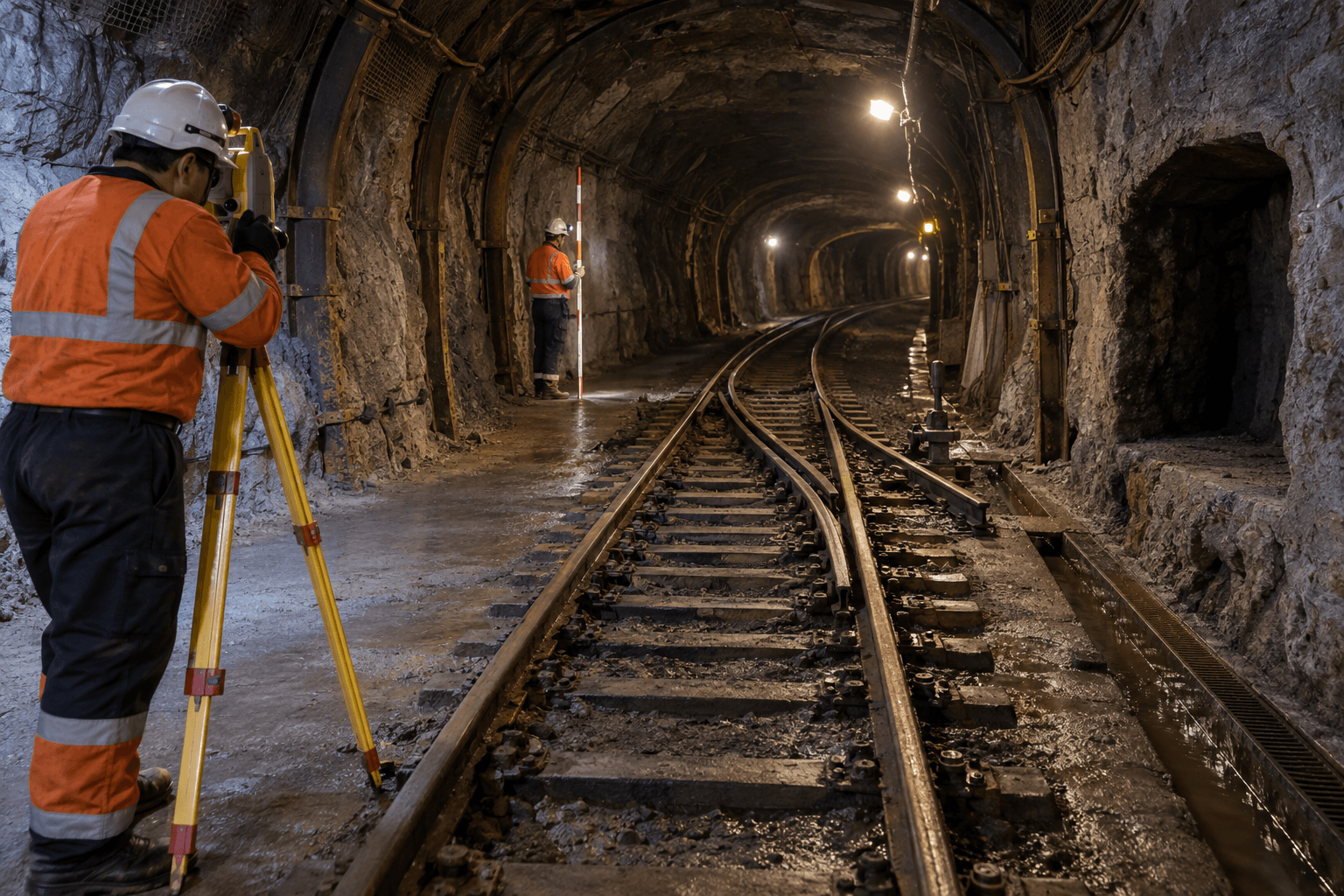
For the design baseline, note rail section and mounting, gauge, joints, turnout geometry, support, ballast or slab condition, crossings, drainage channels, water paths and access for maintenance. Photograph or scan representative constraints under the mine's document controls, then attach them to the route record. The aim is to reveal design interfaces and construction limits, not to assign an in-service defect class or approve a line for traffic.
HSE Mines06 provides UK guidance on rail track and associated underground mine equipment. It supports the principle that track and associated equipment deserve controlled attention, but local inspection intervals, defect limits and acceptance rules must come from the mine's approved system and jurisdiction. When the route enters service, hand the baseline to the maintenance/track owner and use the dedicated track-inspection plan to establish inspection, control, repair and verification records.
Engineering note: Decision boundary: a design survey can identify a drainage or geometry constraint. It does not, by itself, authorize track condition, vehicle movement or construction work.
An original evidence-to-design survey flow
The following flow keeps field observations tied to a design decision. It is an original project-planning sequence, not a survey method statement. The mine's survey rules, permits, isolation arrangements and competent persons govern the actual field work. Use the sequence to expose missing evidence early enough to correct scope, access or design assumptions before a purchase order relies on them.
- Define the route purpose, limits, survey control, reference system, access constraints and deliverables.
- Capture aligned horizontal and vertical route evidence, including grade, curves, turnouts and interfaces.
- Measure or verify clearance, services, support, drainage and temporary-work constraints against the same reference.
- Issue a controlled route register with source, date, method, limitations, photographs and open items.
- Use the register for configuration review, installation planning, acceptance criteria and change control; refresh it after material changes.
Package survey evidence for engineering and procurement
Provide an indexed route plan/profile, survey-control statement, alignment and elevation files or drawings, clearance records, track and turnout register, drainage and services log, annotated photographs under project controls, temporary-works register, access restrictions and an open-items list. A simple spreadsheet can work if identifiers link across drawings, photos and observations. Avoid sending a folder of unreferenced pictures; it cannot show where a constraint occurs or whether it is current.
For a configuration request, also provide expected train and payload, duty, proposed power system, vehicle and load envelope, installation sequence, applicable requirements and project decision date. Clayton and other OEM material may help buyers understand that mining rail equipment is application-configured, but a supplier brochure is not a route survey. Ask bidders to return their assumptions, requested clarifications, interfaces and exclusions in writing.
| Deliverable | Minimum content | Review owner |
|---|---|---|
| Route register | Identifiers, route limits, status, source, date, method and open issues | Survey / engineering |
| Geometry set | Alignment, profile, grade, curves, turnouts, gauge and route references | Engineering / haulage |
| Envelope and services log | Clearance, supports, walkways, services, drainage and temporary works | Design / construction |
| Operating-interface sheet | Train, load, duty, power, crossing, access and recovery assumptions | Operations / safety |
| Supplier assumptions register | Configuration basis, exclusions, calculation/testing needs and revisions | Procurement / engineering |
Use change control to keep the survey useful
Route evidence expires when the physical route changes. Establish triggers for new development, rehabilitation, water ingress, turnout work, support change, service relocation, revised clearance, new loading process, power infrastructure, rolling-stock change or temporary works. Each trigger should say who re-surveys, who updates the register, who receives the new revision and which outstanding design decision is reopened.
A complete record does not mean every value is final; it means the reliability and ownership of each value is visible. The surveyor owns measurement provenance, engineering owns design interpretation, operations owns working-duty facts, construction owns temporary constraints and the project authority owns acceptance. That separation gives a B2B buyer a defensible basis for a supplier discussion without pretending that a generic checklist has approved the system.
Frequently asked questions
What is the first deliverable in an underground rail route survey?
Define a controlled route register: route limits, reference system, purpose, source documents, measuring method, access limits, responsible owner and open issues.
Is track gauge enough to select underground rail equipment?
No. Selection also needs alignment, grade, curves, turnouts, clearance, rail/track condition, train and payload, power, braking, access and local requirements.
How should clearance be recorded?
Reference it to the route alignment and rail datum, identify the constraining feature and its location, state the measurement method and preserve the drawing or observation source.
Does a survey checklist replace track inspection?
No. A survey establishes design and procurement inputs; in-service inspection controls the condition of an approved operating route over time.
Why do drainage and temporary works belong in the route package?
They can affect track support, clearances, access, sequencing and operating restrictions, and they may change after the base drawing was issued.
Can an OEM brochure provide the route geometry?
No. It may describe a vehicle family, but the mine must supply controlled route evidence and receive configuration-specific assumptions in return.
When should a route survey be refreshed?
Refresh it after material changes to alignment, grade, track, turnout, clearance, support, drainage, services, temporary works, rolling stock or operating duty.
Sources & references
- HSE Mines06: Rail track and associated equipment in underground mines
UK guidance for rail track and associated underground mine equipment; not a survey method or universal acceptance specification.
- NSW Resources Regulator: survey plans
New South Wales statutory survey-plan context; apply only where that jurisdiction and requirements govern the work.
- OSHA underground construction standard
United States underground-construction regulatory context; confirm legal applicability and mine-specific requirements.
- Canada Coal Mining Regulations, section 60
Canadian federal coal-mining regulatory text; jurisdiction and mine type must be confirmed before use.
- Clayton mining locomotives
OEM example of application-configured mining locomotives; it does not establish route requirements or suitability for another supplier.
Turn the guide into a project requirement
Send the route, train, duty, power, environment and interface data. ShaoLi can review the requirement against relevant product and solution paths without treating a generic guide as a final design.
Request an engineering review