
Engineering & Buyer Guide
Mining Locomotive Tractive Effort: Route Inputs for a Defensible Haulage Review
Which route and train inputs are needed before a mining locomotive's tractive effort can be assessed?
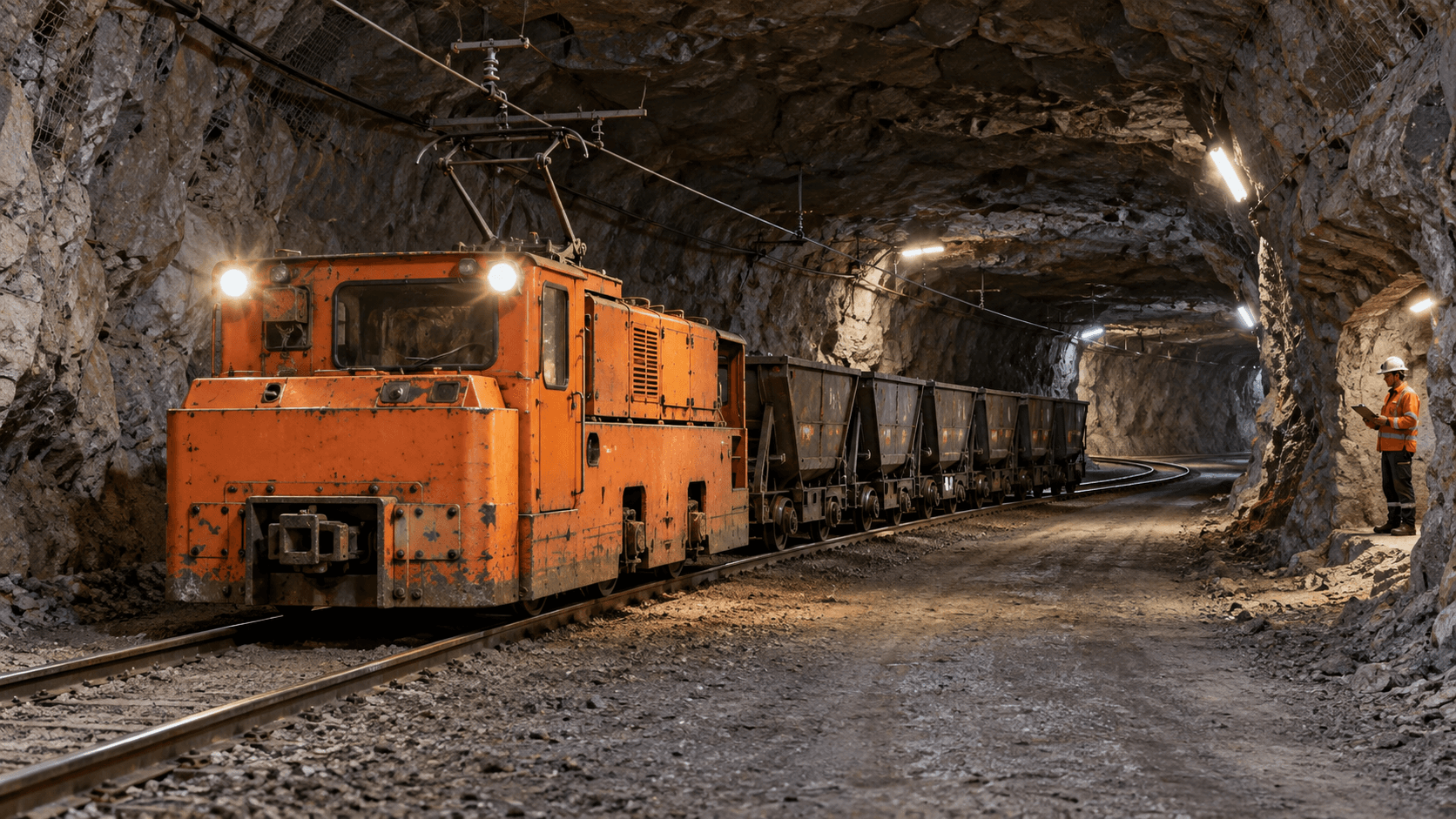
AI-generated illustration — generic staged scene, not a ShaoLi facility, delivered equipment, customer site, measured result or performance evidence.
TL;DR / Direct Answer
Which route and train inputs are needed before a mining locomotive's tractive effort can be assessed?
A credible tractive-effort review starts with a controlled route and train record, not a locomotive model number. Record the loaded and empty consist, ruling gradient, curve and switch constraints, rail and adhesion conditions, speed restrictions, braking arrangement and duty changes. Then ask an engineer to compare the proposed configuration against those named assumptions. This guide helps prepare that input package; it does not certify a locomotive, calculate a safe train mass or replace project-specific braking and risk approval.
TL;DR: what decision does the route-input package support?
Use one version-controlled package to decide whether a supplier or project engineer has enough evidence to review a proposed locomotive and consist. The package should make the worst credible movement visible: direction of travel, train formation, payload state, route section, grade, curvature, track condition, operating restriction and braking basis. A general statement such as 'underground haulage' is not enough because the ruling section may govern the answer.
The output is a review boundary, not a promised capacity. A supplier may need more information about wheel arrangement, motor/control characteristics, power source, couplers, brake equipment, local rules and acceptance method. If a field is unknown, label it unknown and assign an owner. Filling an unknown with an optimistic estimate can make a proposal appear suitable when the project has not yet established the condition that matters.
| Decision question | Evidence to collect | What it prevents |
|---|---|---|
| Can the consist move on the route? | Loaded and empty masses, route direction, grade profile, curves, switches and rail condition | Treating an average grade or unloaded mass as the governing case |
| Can wheel force be transmitted? | Wheel/rail interface, contamination, moisture, maintenance state and operating restrictions | Assuming published tractive effort is always available at the rail |
| Can the train be controlled? | Approved brake arrangement, speed limits, grade, train formation and failure response | Using traction evidence as a substitute for braking evidence |
| Can the proposal be accepted? | Applicable site rules, drawings, calculations, test plan and release authority | Turning a preliminary quotation into a return-to-service approval |
Build a route register before asking for traction numbers
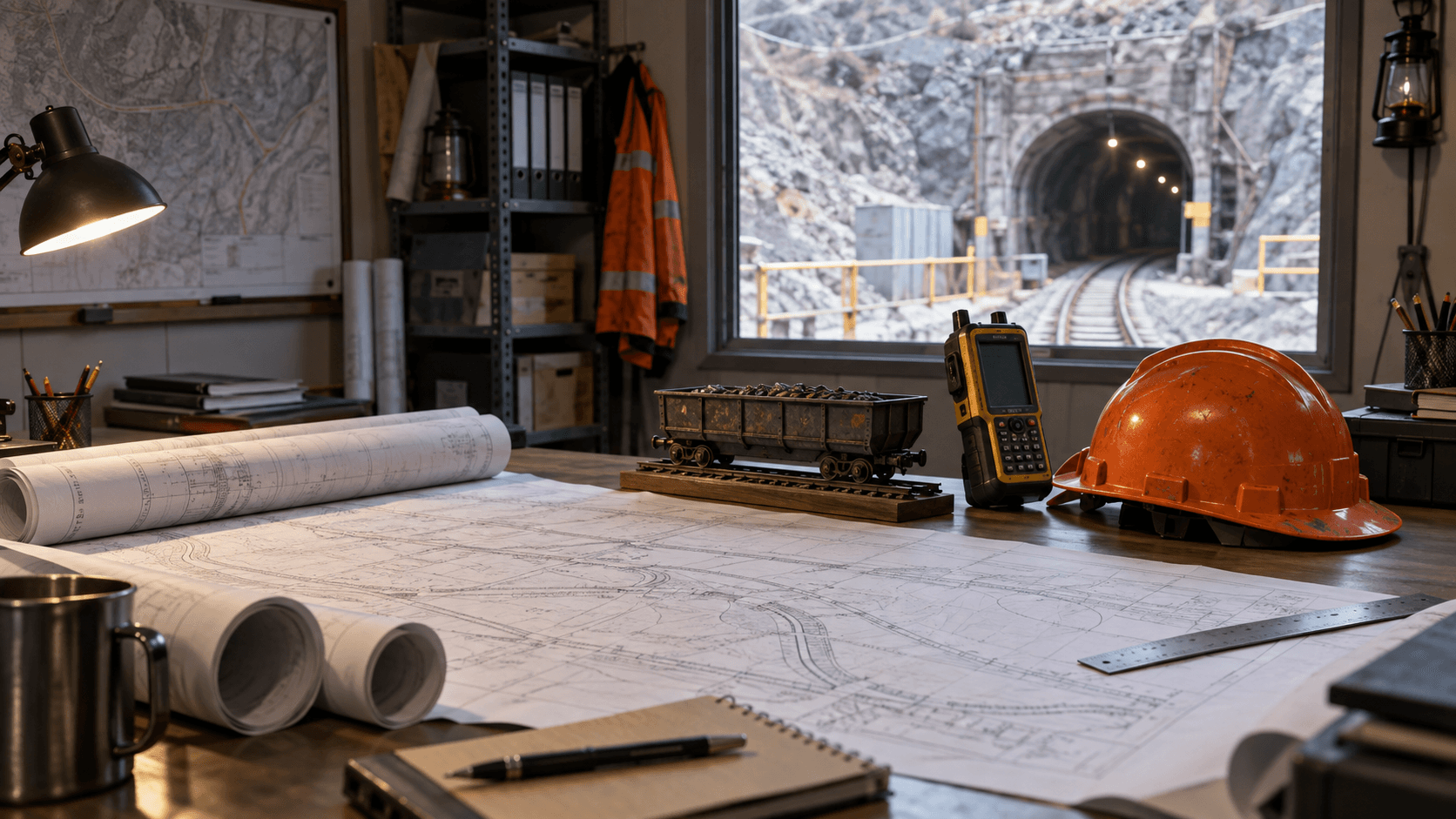
Divide the planned movement into identifiable route sections instead of relying on one mine-wide distance. For each section, preserve the alignment drawing or survey source, direction, elevation change, maximum local gradient, curve and turnout locations, rail section, gauge, clearances, drainage condition, crossings, loading and discharge interfaces, work zones and temporary restrictions. Capture the date and method behind every observation. A route can change after rehabilitation, development, water ingress or a new passing point; the register needs a change trigger.
Mark the ruling case explicitly. It may be a loaded ascent, a constrained curve, a turnout with a lower speed, a wet location or a recovery move rather than the longest section. HSE's underground locomotive-haulage guidance treats haulage as a system of route, rolling stock, operation and control rather than an isolated vehicle choice. That is why a route sheet must travel with the train and duty record into engineering review. It also lets procurement ask suppliers to state which assumptions their proposal uses.
Describe the train and duty in both directions
Record the locomotive configuration and the complete consist separately. The train record should identify each car type, tare mass, approved payload or passenger duty, expected gross mass, coupler arrangement, brake participation, wheel condition and any item that changes the formation. Do not merge a nominal car capacity into a total train mass without checking material density, loading method and actual distribution. A different payload or added service car can change the governing movement.
Then map a duty cycle: loading, acceleration, travel, waiting, discharge, empty return, charging or power transitions, maintenance and credible degraded modes. State how many movements are expected and whether the route, load or timetable changes by shift. This does not create a capacity model; it provides the operating context for a traction review. For a broader production bottleneck study, use the related rail-haulage capacity planning guide, which keeps cycle queues separate from the route resistance question addressed here.
- Identify the exact locomotive, power arrangement and fitted revisions proposed for review.
- List each vehicle in the proposed consist and distinguish tare, payload and gross mass.
- State loaded and empty directions, normal and exceptional formation, and any permitted recovery mode.
- Record operating speed restrictions, stopping points, crossings, turnout moves and worksite interfaces.
- Attach the source and date for every mass, route and duty assumption; flag unverified values.
Why traction, adhesion and resistance are not one catalogue field
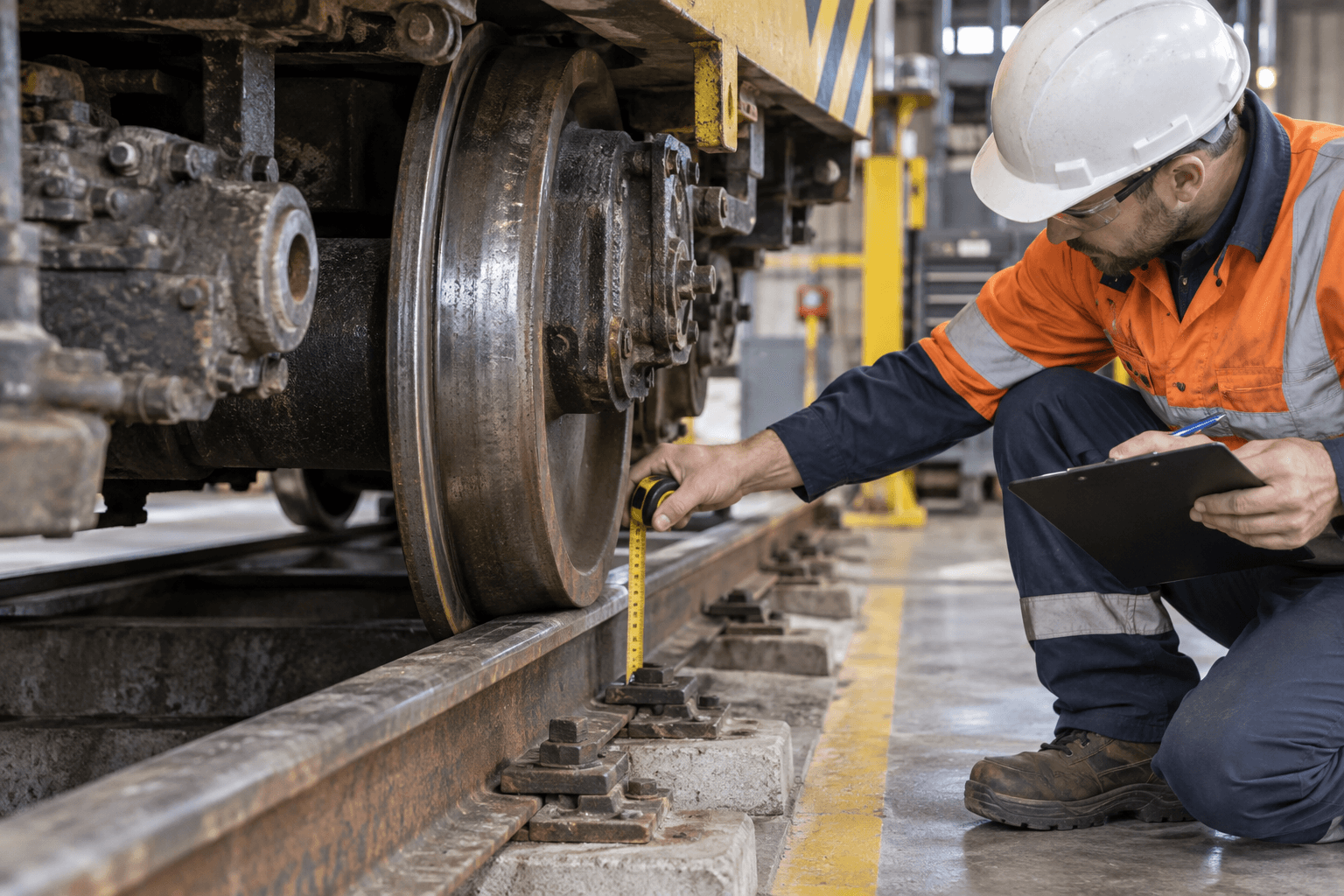
A review normally distinguishes force available at the wheel, force that can be transmitted through the wheel–rail interface, and resistance imposed by the train and route. Grade, curves, rolling condition and acceleration demand affect the resistance side. Wheel loading, rail condition, contamination, moisture, sanding arrangements where approved and operating controls affect the adhesion side. Motor and control characteristics influence how force is delivered across speed. These relationships require the actual vehicle and route data; this article intentionally supplies no universal coefficient or tonnage figure.
Supplier data can still be useful when it is kept in scope. Schalke publishes configuration-specific mining-locomotive information, and Brookville presents different underground mining rail vehicle families; neither supplier's stated values can be transferred to a ShaoLi configuration or an unreviewed route. Ask every bidder to identify the exact model, configuration, test or calculation basis, ambient and route assumptions, exclusions and the meaning of any traction value. Similar dimensions or a shared power label do not make values interchangeable.
Keep braking and train control as independent release gates
A train that can start is not automatically a train that can be held, stopped or recovered. Braking review needs the approved consist, worst route direction, speed, brake distribution, brake condition, coupler forces, response behaviour, stopping or holding criterion, failure modes and the mine's authority to release the movement. It must use the same route and mass assumptions as the traction review. Do not backfill a missing brake case with a tractive-effort statement.
HSE's Mines06 guidance addresses rail track and associated underground mine equipment, including the need for suitable inspection and maintenance arrangements. It is a United Kingdom guidance source, not a substitute for the mine's jurisdiction, risk assessment or approved test method. Use the published brake-testing guide for the evidence layers that follow a configuration decision. Until the site identifies its acceptance authority and criteria, describe braking status as unresolved rather than approved.
Engineering note: Boundary: this is a data-preparation guide. Only the responsible project process can determine calculations, operating limits, brake tests and release authority.
A five-gate route-input workflow
This workflow is deliberately sequenced so a missing route fact is found before it becomes a supplier assumption. It is an original planning flow for the evidence package, not an operating procedure. Each gate should retain the input source, reviewer, date, open issues and the condition that triggers a refresh. Project drawings, local rules, risk controls and approved test procedures take precedence at every gate.
- Freeze the requested movement: route direction, consist, payload state, duty and proposed locomotive configuration.
- Survey and register route sections: grade, curves, turnouts, gauge, rail condition, clearance, drainage and restrictions.
- Check wheel–rail and train interfaces: wheel loading, track condition, couplers, brakes and permitted operating controls.
- Issue an assumption-controlled review package: sources, unknowns, calculation and test requests, jurisdiction and acceptance owner.
- Close the loop with approved evidence: drawings, configuration, measured or witnessed tests, deviations and formal release.
What should a traction-review or RFQ package contain?
Send a route plan and longitudinal profile, gauge and rail details, minimum curve information, clearances, turnout layout, train formation, masses in each direction, operating cycle, power arrangement, environment, maintenance constraints and governing local requirements. Include photographs only as context; they do not replace measurements or controlled drawings. State whether the study is conceptual, procurement-stage or acceptance-stage so the supplier does not mistake a preliminary request for a completed design basis.
Ask the respondent to return an assumption register, the proposed configuration, the route sections examined, calculation and braking boundaries, data gaps, required drawings, testing or proving evidence, documentation and exclusions. A meaningful response makes uncertainty visible. ShaoLi's mining locomotive series is the relevant commercial starting point for a configuration conversation, while the site's credentials and published cases are company context rather than proof that a proposed route has been approved.
| Attachment | Owner | Status to state |
|---|---|---|
| Route alignment and profile | Mine survey / engineering | Measured, drawing-derived, preliminary or unknown |
| Consist and gross-mass sheet | Operations / mechanical | Normal, maximum and degraded formations |
| Track, wheel and interface record | Track / maintenance | Observed condition, date and limitations |
| Brake and operating-rule basis | Operations / safety | Approved document reference or open action |
| Supplier response register | Procurement / engineering | Assumptions, exclusions, calculation and acceptance requests |
Refresh the review when the route or configuration changes
Treat route data as a configuration item. Trigger a review after changes to grade, curve, turnout, rail, wheel, locomotive, car, coupler, brake, payload, power system, work zone or operating rule. A new route section can invalidate a previously accepted assumption even if the locomotive has not changed. Keep the prior package so engineers can see what changed rather than rebuilding an undocumented calculation from memory.
The transport engineer owns the route and train assumptions, maintenance owns factual condition records, operations owns the duty and restrictions, procurement owns the supplier's written assumptions, and the mine's responsible authority owns approval. If those owners disagree, preserve the disagreement as an open issue. That discipline is more valuable to a buyer than a generic claim that a locomotive 'handles steep grades.'
Frequently asked questions
What is the first input for a locomotive tractive-effort review?
Freeze the actual proposed movement: route direction, train formation, loaded or empty mass and the exact locomotive configuration. Then identify the route section that may govern.
Can a catalogue traction value prove my train mass is suitable?
No. Its test or calculation conditions may differ from your grade, curves, rail condition, adhesion, power arrangement, consist and braking basis.
Why do loaded and empty movements need separate records?
Mass, direction, braking demand, coupler forces and the ruling route section can differ between loaded and empty travel.
Does a route's average gradient provide enough evidence?
No. Identify the local ruling gradient and its direction, together with curves, turnouts, track condition and restrictions.
Is wheel–rail adhesion a fixed project value?
Do not assume so. It can be affected by wheel and rail condition, moisture, contamination, loading and approved operating controls.
Can traction evidence replace braking approval?
No. Braking and train control are separate review and acceptance gates that must use the same approved route and consist assumptions.
When should the route-input package be updated?
Update it after any material route, track, vehicle, consist, payload, brake, power or operating-rule change, and retain the reason for the revision.
Sources & references
- HSE: Underground locomotive haulage
UK health-and-safety guidance on underground locomotive haulage; local mine rules and approved engineering processes take precedence.
- HSE Mines06: Rail track and associated equipment in underground mines
UK guidance for rail track and associated equipment; not a project acceptance specification.
- Schalke mining locomotives
OEM example of configuration-specific mining-locomotive data; values apply only to Schalke equipment and stated conditions.
- Brookville underground mining rail
OEM example of underground mining rail vehicle families; not evidence of suitability for another supplier or route.
- OSHA underground construction standard
United States underground-construction regulatory context; confirm the actual mine jurisdiction and applicability.
Turn the guide into a project requirement
Send the route, train, duty, power, environment and interface data. ShaoLi can review the requirement against relevant product and solution paths without treating a generic guide as a final design.
Request an engineering review