Engineering & Buyer Guide
Mining Locomotive Pre-Use Inspection: A Defect, Isolation and Escalation Guide
How should a mine structure a pre-use inspection for an underground locomotive without turning it into a generic tick-box release?
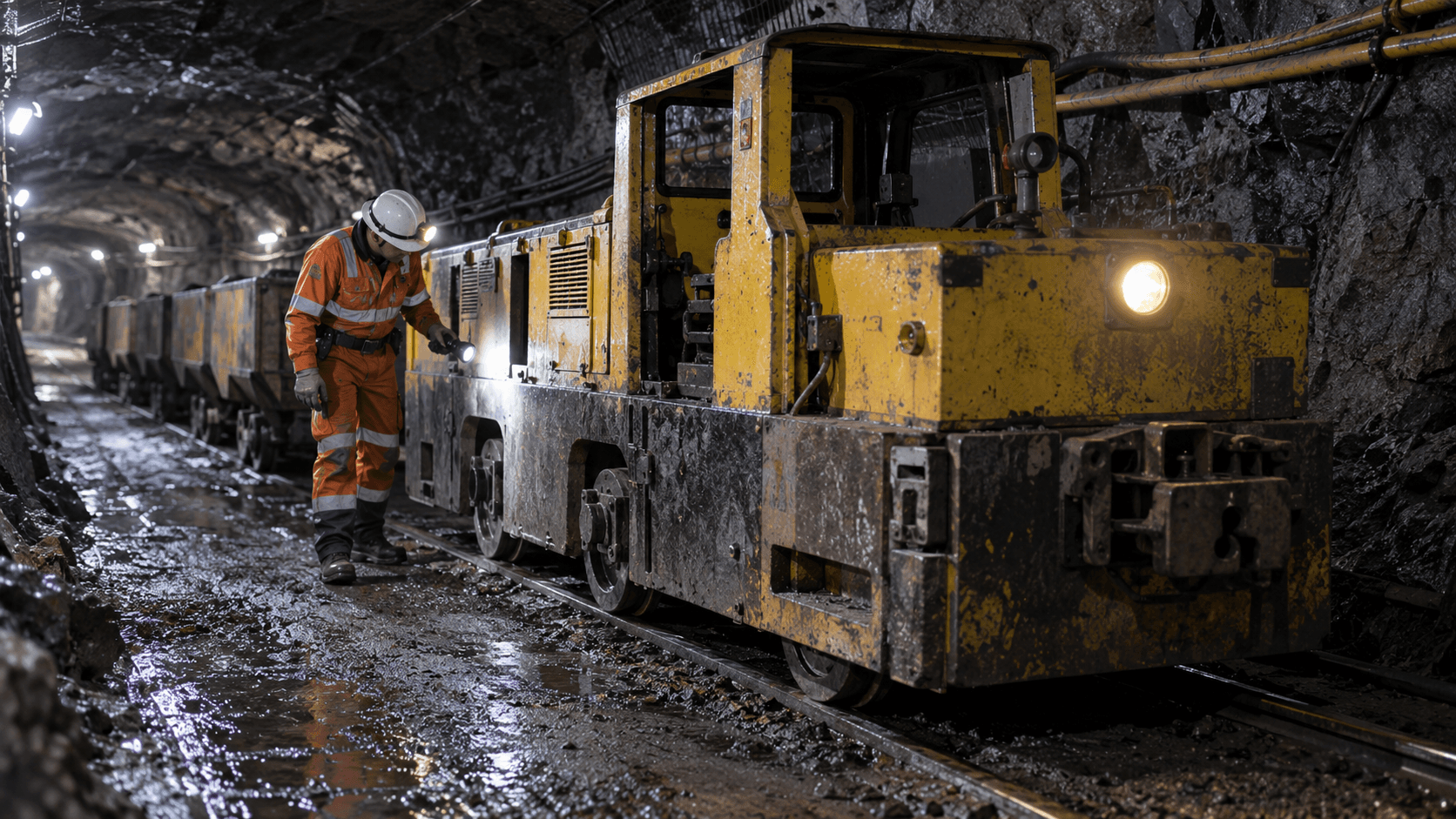
Illustrative planning scene; it is not a ShaoLi factory, customer project, acceptance record or certification evidence.
TL;DR / Direct Answer
How should a mine structure a pre-use inspection for an underground locomotive without turning it into a generic tick-box release?
A pre-use inspection is a controlled check for conditions that could make the next movement unsafe or unreliable—not a generic checklist that authorises operation. Build it around the actual locomotive, train, route, environment and mine procedure; record defects clearly; isolate or restrict equipment through the approved process; and escalate conditions that need competent review. Inspection frequency, acceptance limits and final release authority remain site- and jurisdiction-specific.
Define the inspection boundary before writing a checklist
A meaningful pre-use inspection begins with the question: what equipment, consist, route and operating condition is about to be used? A locomotive alone is not the whole movement. Couplers, attached mine cars, braking interfaces, route obstructions, clearances, power arrangement, communications and people in the work area may all change the relevant checks.
This guide is not a model-specific operating instruction and does not set a universal interval, defect limit or release criterion. The equipment manual, mine procedure, risk assessment, local law and competent site authority govern those decisions. Use this article to structure evidence and escalation, then tailor the actual check to the approved operating context.
| Check level | Purpose | Typical output |
|---|---|---|
| Pre-use observation | Identify visible or functional conditions relevant to the next movement | Record, report, isolate or refer a defect |
| Planned maintenance inspection | Assess deterioration and service needs against controlled requirements | Maintenance work order, condition record or repair plan |
| Test or acceptance activity | Verify a defined configuration, system or change through an approved method | Controlled test record and accountable release decision |
Use one consistent walkaround route
A repeatable start and end point helps the operator make observations systematically without pretending that every item has the same risk. MSHA’s public pre- and post-operation guidance recommends a defined inspection route, use of a designated report form and attention to defects before operation. The detailed items for an underground rail locomotive still need to come from the actual equipment, mine rules and task risk assessment.
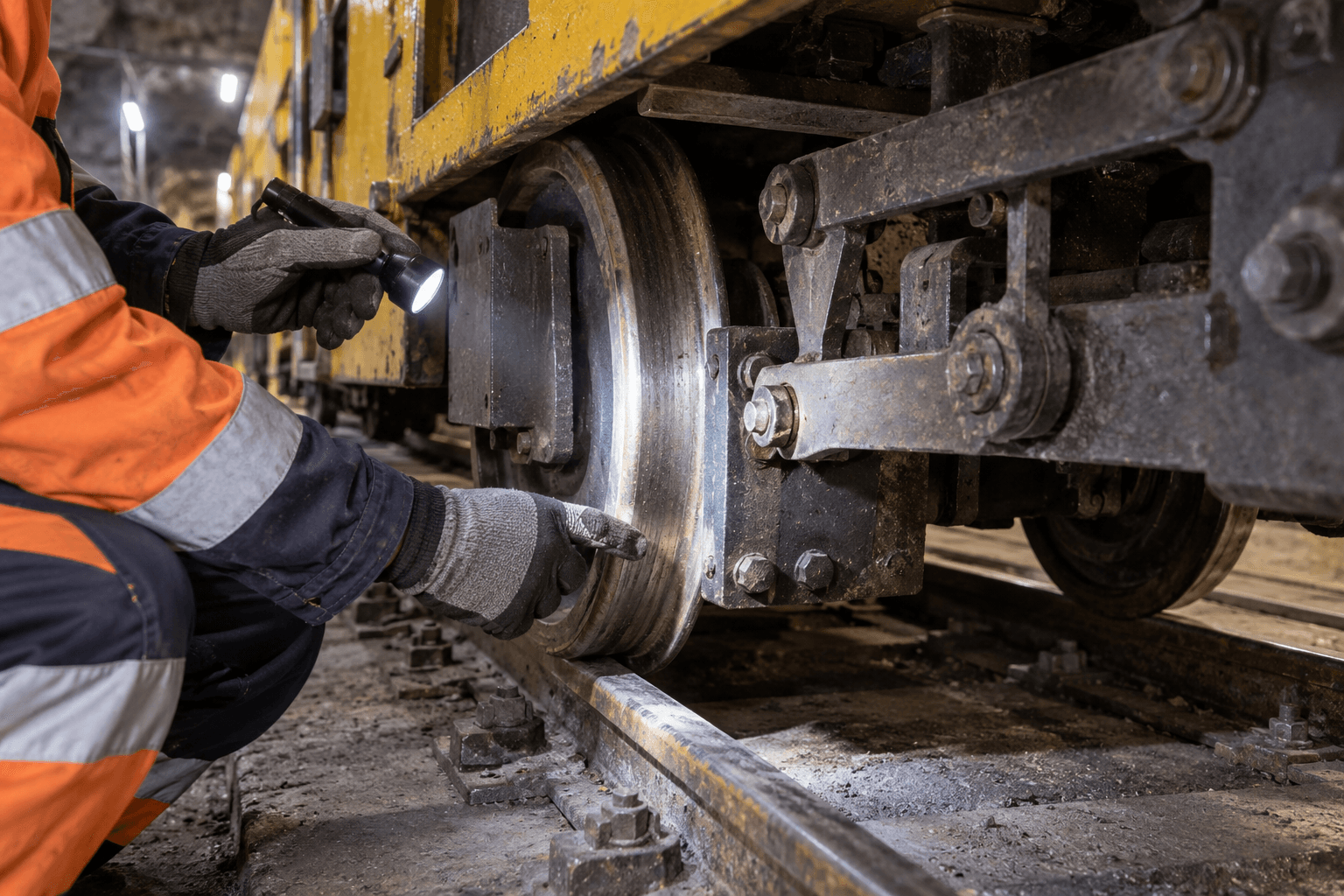
The walkaround may include visible structure and guards, coupler and mine-car interfaces, running gear, leaks, cab visibility, lighting, warning devices, accessible electrical condition, brake-related observations and route readiness. It should never require a worker to defeat safeguards, enter an unsafe position or carry out a repair beyond their authority.
Make functional checks conditional and controlled
Some equipment requires functional checks before the next movement, such as warning devices, lighting, controls or braking functions. The approved procedure must define who can perform them, where they may be performed, what conditions apply and what result requires the locomotive or train to be withdrawn, restricted or escalated. A web page should not prescribe a test speed, stopping distance or acceptance threshold for an unknown locomotive and route.
Transport Canada’s railway rules provide one public example of a pre-departure inspection that includes brakes, hand brake, lights, running gear and apparent hazards. It is Canadian rail regulation rather than a universal underground-mine procedure. Its value here is the distinction between a documented inspection responsibility and the different, configuration-specific maintenance and safety requirements that follow.
- Confirm the responsible person and the controlled procedure for the movement.
- Check the route, attached consist and interface conditions that matter for that movement.
- Perform only authorised functional checks in the approved location and sequence.
- Record the observed condition and the action taken, rather than writing a vague ‘OK’.
- Stop, isolate, restrict or escalate through the mine procedure when a defect is found.
Turn a defect into a controlled decision
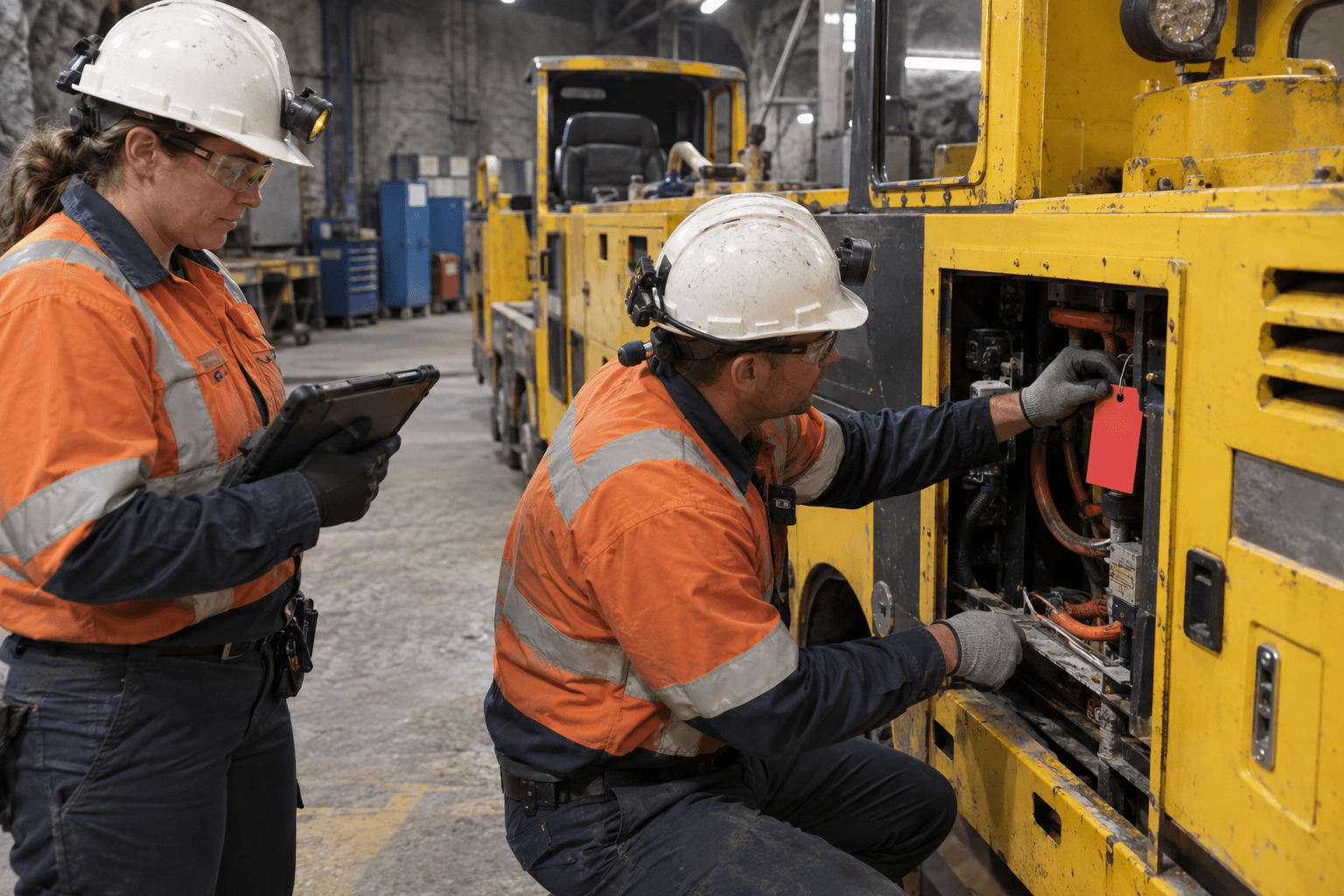
A useful defect record says what was observed, where, on which identifiable equipment, under what condition and who was told. It does not diagnose a component beyond the observer’s competence. Include photographs only where the mine’s process allows them, and link the record to the equipment identity and the actual consist or route when that matters.
The next action must be explicit: continue only under an approved restriction, remove from service, isolate, send for competent assessment or create a maintenance work order. HSE guidance on work-equipment inspection stresses that the scope and frequency should reflect risk assessment and that equipment requiring inspection should not be used when required inspection has not occurred. Its United Kingdom context must be read alongside the applicable mine rules.
Engineering note: Do not convert a red tag, maintenance ticket or supplier email into a release decision. The responsible mine process determines isolation, repair, re-inspection and return to service.
Add underground route and train interfaces
Underground rail-bound equipment introduces checks that are not visible in a general mobile-equipment template. The South African Government’s published underground rail-bound equipment guidance, for example, includes pre-use checklist implementation alongside braking, coupling, communications, switches and trolley-line considerations. The document applies within its own legal and mine-code context; it does not create a ready-to-use global checklist.
For a mine-specific procedure, identify the applicable locomotive power system, train formation, coupler and brake interfaces, route restrictions, clearances, communication method, work zones, personnel exposure, charging or trolley boundaries, and recovery arrangements. Feed recurring observations into maintenance and route-control review instead of treating every repeat defect as an isolated shift event.
| Input | Why it changes the check | Owner to confirm |
|---|---|---|
| Locomotive and power configuration | Changes accessible systems, indicators and approved operating limits | Engineering and maintenance |
| Attached consist and couplers | Changes train, brake and interface observations | Operations and mechanical team |
| Route, work zones and clearances | Changes movement, visibility and personnel controls | Dispatch or route authority |
| Mine rules and jurisdiction | Define required checks, records and release authority | Mine management and competent authority |
| Recent defect and repair history | Highlights recurrence without redefining acceptance limits | Maintenance planner |
Use records to learn without creating false precision
A simple structured record can reveal recurring conditions: the same location on a route, a repeated interface issue, an unclear operator instruction or a component that repeatedly requires attention. Use that pattern to trigger a competent review of maintenance, route conditions, training, spare parts or operating controls. Do not use a small number of reports to claim a failure rate, service interval or component life that has not been analysed and approved.
Ontario’s public guidance for independently powered mine conveyances says installation and pre-use inspection procedures should be developed and tested regularly. That supports the idea of reviewing the procedure itself as conditions change, while leaving the actual requirement and acceptance process to the applicable jurisdiction and mine.
- Identify the locomotive, attached equipment and proposed movement or route.
- Use the approved walkaround and observation sequence for that configuration.
- Complete any authorised functional checks under the prescribed controls.
- Record defects with equipment identity, location, condition and immediate action.
- Apply the mine’s isolation, restriction or escalation process; do not self-authorise repair or release.
- Review repeated findings through maintenance, operations and route-control processes.
Specify inspection support before purchase and handover
An RFQ can ask suppliers to identify the configuration-specific manuals, inspection inputs, fault indications, maintenance boundaries, special tools, parts identities, training materials, diagnostic access and change-control process that they can provide. It should also require the project team to state the route, power, rolling-stock, local-rule and responsibility boundaries that the supplier cannot infer.
ShaoLi can review a project’s available inputs against a proposed equipment configuration and identify questions for clarification. It cannot replace the mine’s authorised pre-use procedure, competent inspection, route authority or final decision to return equipment to service.
Frequently asked questions
Does a pre-use checklist certify that a mining locomotive is safe?
No. It records observations under an approved mine process. Final operational authority depends on the actual configuration, route, mine rules, defect status and responsible decision-makers.
Who may perform a pre-use locomotive inspection?
The mine’s approved procedure and applicable rules should identify the qualified or authorised person, training, scope and escalation route.
Should every defect remove the locomotive from service?
Do not apply a generic web rule. The mine procedure should determine isolation, restriction, repair, competent assessment and release based on the condition and operating context.
Can pre-use inspection replace planned maintenance?
No. Pre-use observation, planned maintenance and formal testing have different purposes and evidence requirements.
What should a defect record include?
At minimum, identify the equipment, observed condition, location or operating context, time, reporter, immediate action, notification and the assigned follow-up or release authority.
Why include the route and train in the inspection process?
A locomotive movement depends on more than the locomotive. Couplers, attached cars, gradients, clearances, work zones, power interfaces and communication arrangements can change the relevant risks and controls.
Sources & references
- MSHA pre- and post-operation inspection guidance
United States surface-haulage guidance on systematic checks and reporting; the mine must apply its own underground procedure and legal requirements.
- HSE: inspection of work equipment
United Kingdom risk-based inspection guidance; it does not prescribe a mining-locomotive release decision for other jurisdictions.
- South African Government underground rail-bound equipment guideline
Public rail-bound-equipment context covering pre-use checklists and related operating issues; apply only through the relevant mine code and jurisdiction.
- Transport Canada locomotive inspection rules
Canadian railway pre-departure inspection context; not a substitute for an underground mine procedure.
- Ontario independently powered conveyances guidance
Ontario mine guidance on developing and regularly testing installation and pre-use inspection procedures.
- Canada coal mining occupational health and safety regulations
Public Canadian regulatory context for inspections, records and battery-locomotive procedures; applicability is jurisdiction- and mine-specific.
Turn the guide into a project requirement
Send the route, train, duty, power, environment and interface data. ShaoLi can review the requirement against relevant product and solution paths without treating a generic guide as a final design.
Request an engineering review