
Engineering & Buyer Guide
Mine Car Loading and Discharge Interface: A Buyer Evidence Package
What evidence must a mine define at the loading and discharge interface before selecting or configuring mine cars?
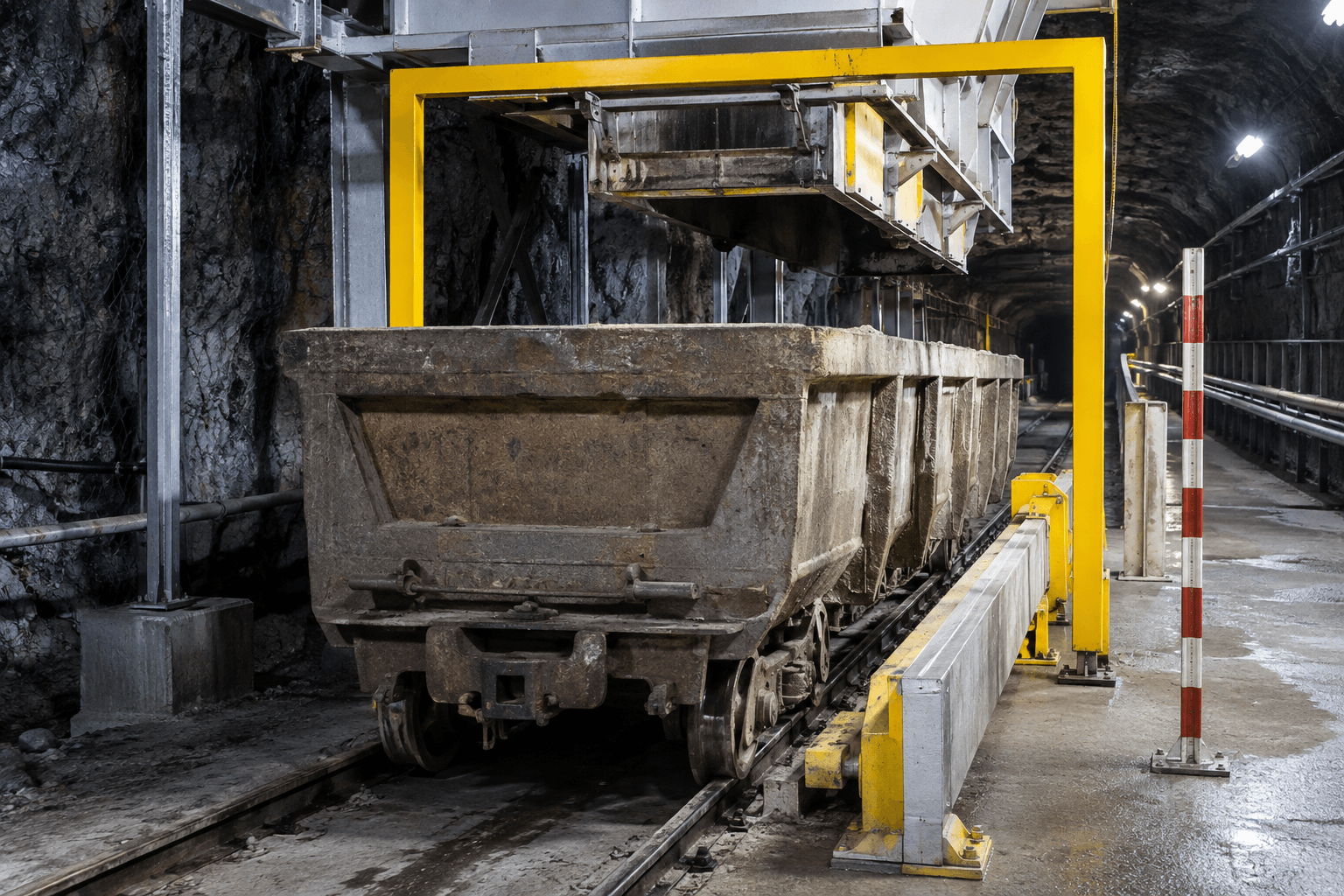
AI-generated illustration — generic staged scene, not a ShaoLi facility, delivered equipment, customer site, certificate, test record or approval evidence.
TL;DR / Direct Answer
What evidence must a mine define at the loading and discharge interface before selecting or configuring mine cars?
A mine car is not specified by nominal volume alone. Before a configuration review, a mine should define the material and its variability, the loading stream, payload-control method, discharge receiver, residual-material expectation, clearances, gauge, curves, couplers, braking participation and the complete operating sequence. This guide turns those facts into an evidence package for engineering and procurement. It does not calculate capacity, approve an operating method or confirm that any product configuration is suitable for a particular mine.
TL;DR: define interfaces before comparing car bodies
The first decision is not a body volume. Freeze the material stream and the interfaces it crosses: source, loading device, car body, travel route, discharge receiver, empty return and abnormal clearing. For each interface, identify the drawing or observation that supports it, the owner, the date, the limitation and the condition that would change it. A quotation can then state exactly which conditions it considers rather than silently treating site assumptions as facts.
Use the package to expose open items, not to hide them. Material density may vary, loading may be batch or continuous, and the receiver may impose clearance, opening, sequence or isolation constraints that are not visible from a photograph. The output is a controlled basis for a configuration conversation and an acceptance plan. Project drawings, operating rules, risk assessments and responsible-site approval always take precedence over this buyer guide.
| Decision | Evidence to collect | Avoids |
|---|---|---|
| Can the material be contained? | Material description, density range, particle-size information, moisture or stickiness observations and payload controls | Using nominal volume as a payload or discharge promise |
| Can loading occur without interference? | Loader envelope, chute or hopper drawing, approach alignment, clearance, spillage controls and operating sequence | Assuming a car that fits a route also fits the loading point |
| Can the car discharge into the receiver? | Receiver geometry, opening, clearance, permitted travel and residual-material handling | Treating a body type as proof of discharge compatibility |
| Can the train operate as proposed? | Gauge, curves, gradients, couplers, brakes, consist and route restrictions | Separating loading and discharge from the rolling-stock system |
Start with a controlled material-and-duty record
Describe what reaches the car, not only the commodity name. Record the source area, expected density range where the mine has measured it, size distribution or oversize risk where known, moisture or adhesion observations, contamination, temperature if relevant, and the evidence source. State whether loading is metered, operator-controlled, batch based or continuous. Keep unknown properties open; they are reasons to request tests or site data, not reasons to insert a convenient density into a supplier comparison.
Then describe duty over a complete cycle: loading approach, loading, checks, loaded travel, waiting, discharge, clearing, empty return, maintenance and credible abnormal events. Identify normal and maximum intended formations separately. Wabi and Irwin publish mine-car and rail-equipment families for differing duties, but a public family description does not transfer a capacity, loading method or site suitability to another configuration. Procurement should ask each bidder to identify the precise assumptions behind its response.
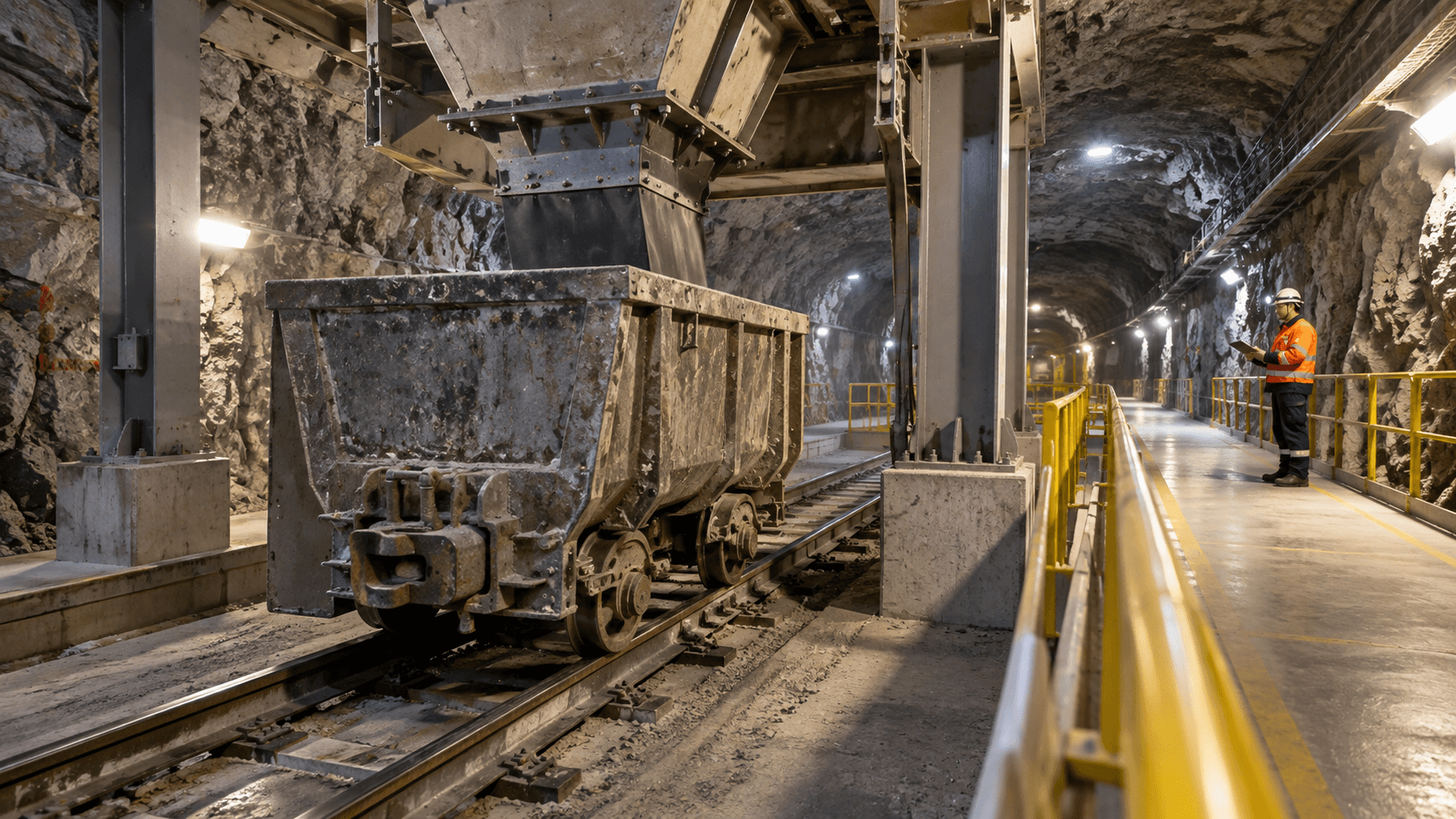
Capture the loading interface as a geometry and workflow problem
Obtain the controlled drawing or measured survey for the loader, chute, hopper or transfer point. It should show the approach direction, rail centreline, available envelope, moving equipment, access paths, guarding, services, drainage, observation point and every location where people may interact with the car. Record the loading height, alignment tolerance and permitted stopping position only when they come from a project document or measurement. A generic body drawing cannot establish those local dimensions.
Write the operating sequence alongside the geometry. Who authorizes approach? What confirms the car is in position? How is loading stopped? How are spillage, blockage, oversize material, vehicle movement and pedestrian access controlled? These questions belong to the mine's approved procedure and risk process. They are useful at procurement stage because they identify interfaces that a future configuration, operating rule and acceptance test must address.
- Controlled loader or chute drawing, survey reference and observation date.
- Car approach direction, stopping reference, route authority and access boundary.
- Expected material stream, payload control, spill points and cleaning method.
- Clearance, guarding, service, drainage and work-area constraints.
- Normal, degraded and maintenance sequence with accountable owners.
Treat discharge as a receiver-interface review
Discharge may be governed by a tippler, chute, hopper, transfer conveyor, stockpile interface or another controlled receiver. Document the receiver opening, approach and exit route, elevation, guarding, clearance, material-flow path, permitted vehicle position and the method for handling residual material. Define whether the train must stop, move, isolate or be observed during the sequence from the responsible site's procedure. Do not infer a release mechanism, discharge angle or clearing method from a catalogue image.
The receiving system can be the governing constraint even when the mine car body appears suitable. A discharge point may have restricted access, a fixed impact zone, a narrow envelope, downstream interlocks or a cleaning requirement that changes turnaround time. Brookville's public mining-rail pages underline that underground rolling stock is selected as part of a mine rail system. Use a dated interface sketch and a site walkdown to convert that general principle into evidence the project team can review.
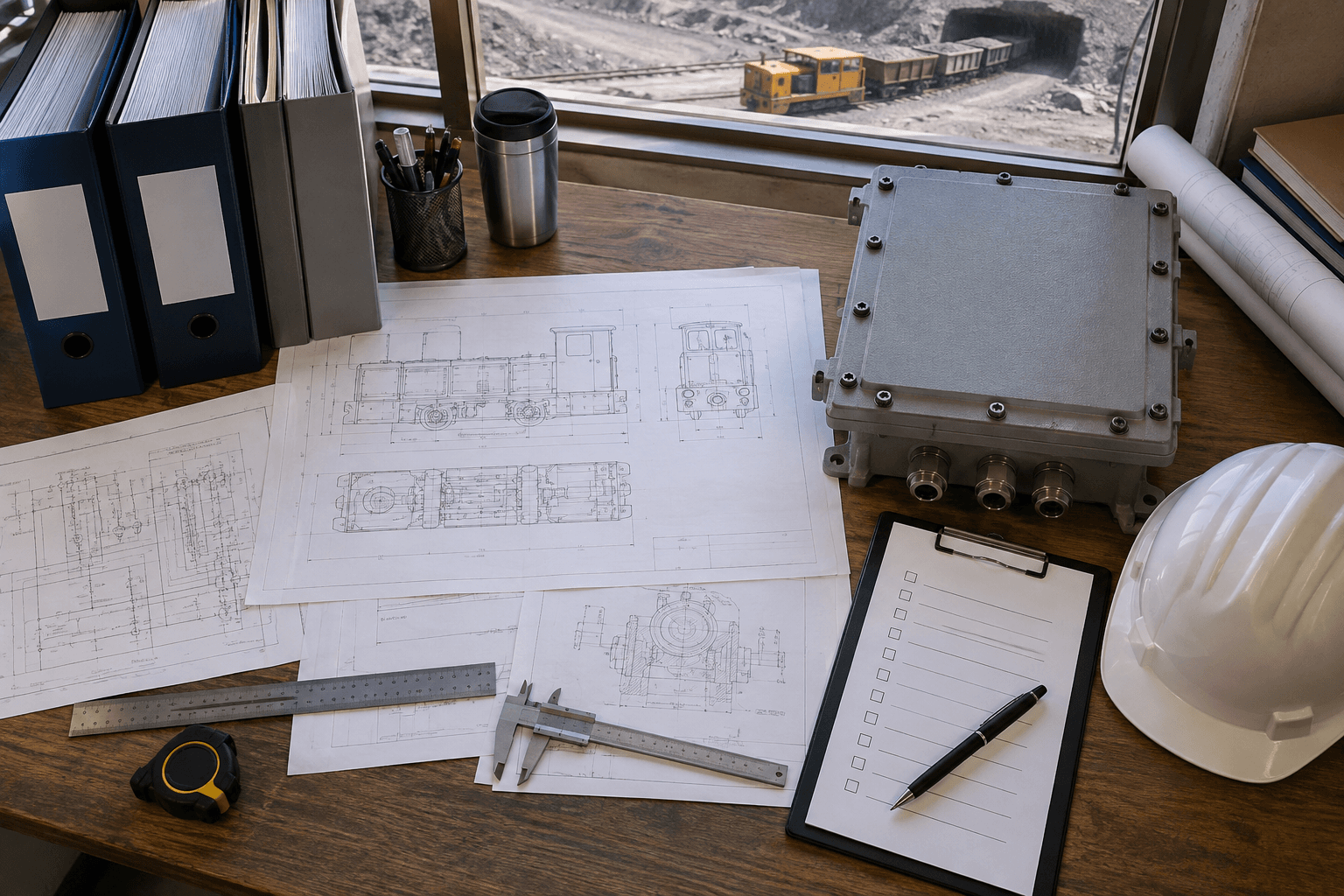
Reconnect body choice to the train and route
A loading or discharge interface does not sit outside the train system. Record gauge, rail condition, route clearances, minimum curves, gradients, turnouts, crossings, locomotive configuration, coupler identity, brake participation and intended formation. Separate car tare mass, intended payload evidence and gross mass rather than creating a universal capacity figure. The mine's traction and braking review must use the same route and formation assumptions that appear in the loading package.
MSHA's published powered-haulage material and off-track transport guidance are United States sources and should be read within their stated scope. They reinforce a useful planning discipline: identify the equipment, route, movement controls and responsible people together. They do not approve an international mine-car configuration or replace local law. Where a site uses another jurisdiction, record the applicable authority and ask the project team to confirm its own requirements.
Engineering note: Boundary: this article supplies a procurement evidence structure. It does not set axle loads, train mass, clearance values, braking limits, dump procedures or return-to-service criteria.
Use a five-gate interface workflow
This original workflow helps a buyer prevent a late interface surprise. Each gate should retain a source, revision, owner, unresolved item and refresh trigger. It is not an operating instruction and must be integrated into the mine's project-control, safety and change-management process.
- Map the material and cycle: source, variability, loading, travel, discharge, return and abnormal handling.
- Freeze controlled loading and receiver evidence: drawings, surveys, clearances, access and sequence boundaries.
- Connect the car to the route and train: gauge, curves, gradients, couplers, brakes, locomotive and formation.
- Issue a supplier evidence request: stated configuration, assumptions, exclusions, drawings and required tests.
- Close acceptance with the approved configuration, witnessed interface checks, deviations and responsible-site release.
Build an RFQ that invites an auditable response
Send bidders the controlled evidence register, not a loose collection of photos. Include material facts, route and rail information, loading and receiver drawings, operating sequence, proposed formation, local constraints and required deliverables. State whether the request is early concept screening, a quotation comparison or acceptance-stage support. This lets suppliers say what they can evaluate and what they need from the mine before any value is treated as a design commitment.
Ask for an assumption register that identifies the proposed car configuration, body and running interfaces, coupler and brake boundaries, loading/discharge interfaces examined, exclusions, drawing requirements, inspection and test evidence, spares and change-control requests. ShaoLi's material-handling product area is a commercial starting point for a configuration discussion; it is not evidence that a particular material, route or receiver is approved. Link the response to the mine-car selection, coupler inspection and route-survey records before deciding next steps.
| Attachment | Responsible input owner | Status to state |
|---|---|---|
| Material and duty record | Mine planning / operations | Measured, estimated, seasonal or unknown |
| Loading and receiver drawing | Process / engineering | Controlled revision, survey-derived or preliminary |
| Route and rolling-stock record | Track / mechanical | Gauge, formation, constraints and open points |
| Operating and safety boundary | Operations / safety | Approved reference or project action required |
| Supplier assumption register | Procurement / engineering | Configuration considered, exclusions and evidence requested |
Control changes through handover and acceptance
Refresh the package if material source, loading equipment, receiver, route, consist, car configuration, coupler, brake arrangement or operating rule changes. Preserve the prior revision and show the decision affected. A later modification may change the loading envelope or discharge sequence even when the car body itself is unchanged. This record is also useful when a site must explain why a test or supplier response applies to one configuration but not another.
At handover, group configuration drawings, material assumptions, interface records, inspection criteria, operating boundaries, deviations, test results and release decisions under the mine's document-control process. The mine's accountable engineering and operations authorities decide whether evidence is complete. Clear ownership is more defensible than a generic claim that a mine car is suitable for all loading and discharge systems.
Frequently asked questions
Is nominal mine-car volume enough to choose a car?
No. Material variability, loading method, receiver geometry, route, formation, couplers and braking evidence can all affect the configuration review.
What material information should be sent to a supplier?
Send the mine's controlled record for source, observed density range where available, size or oversize risk, moisture or adhesion observations, loading method and payload controls. Mark unknowns clearly.
Why is the discharge receiver important before quotation?
The receiver can impose approach, opening, clearance, sequence, residual-material and access constraints that a generic car-body image cannot prove.
Can loading photographs replace drawings or measurements?
No. They provide context only. Use controlled drawings or measured surveys for decision-critical geometry and preserve their source and date.
Does a mine-car body determine the permitted train formation?
No. Formation also depends on gross mass, route, locomotive, couplers, brakes and the mine's approved operating limits.
When should the interface package be revised?
Revise it after a material, loading, receiver, route, consist, car, coupler, brake or operating-rule change that could affect the reviewed condition.
What should acceptance evidence show?
It should identify the approved configuration and project interfaces, the agreed checks or tests, deviations, responsible reviewers and the mine's formal release decision.
Sources & references
- Wabi Mine Equipment Division
Public OEM overview used only to identify mine-car system context; it does not establish site compatibility.
- Irwin Car and Equipment
Public rail-equipment context; product families are not transferable specifications.
- Brookville Mining Rail
OEM system context used without comparison or performance claims.
- MSHA Underground Powered Haulage
United States safety material; project jurisdiction and mine requirements remain controlling.
- MSHA P11-05 off-track equipment transport hazards
United States guidance used for system-thinking context, not as a mine-car approval method.
Turn the guide into a project requirement
Send the route, train, duty, power, environment and interface data. ShaoLi can review the requirement against relevant product and solution paths without treating a generic guide as a final design.
Request an engineering review