Engineering & Buyer Guide
Mining Locomotive Traction Motor Replacement: A Compatibility and Acceptance Plan
How should a mine specify and accept a replacement traction motor for an electric locomotive?
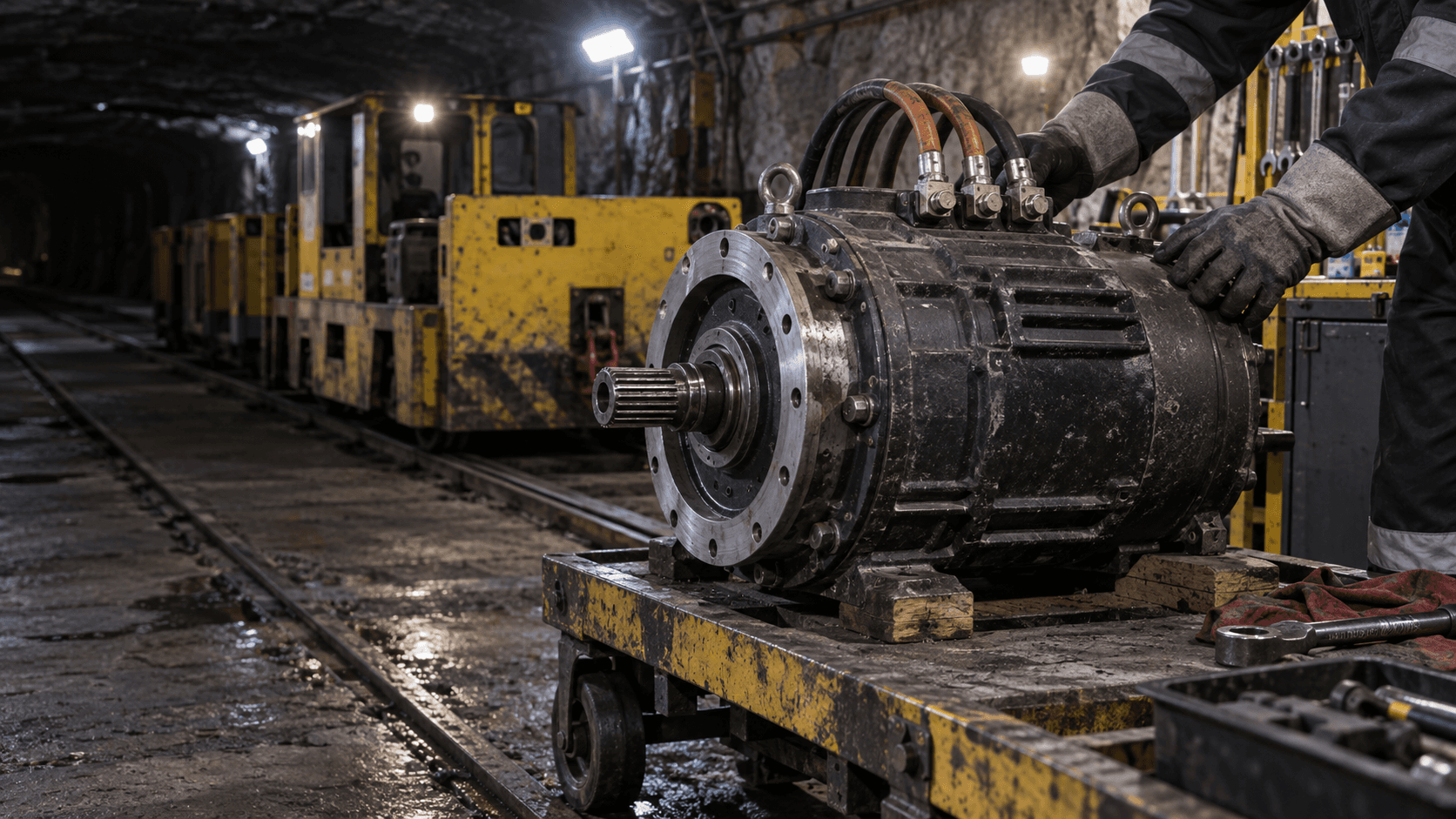
AI-generated illustrative scene. This is not a ShaoLi motor, customer site or documented repair activity.
TL;DR / Direct Answer
How should a mine specify and accept a replacement traction motor for an electric locomotive?
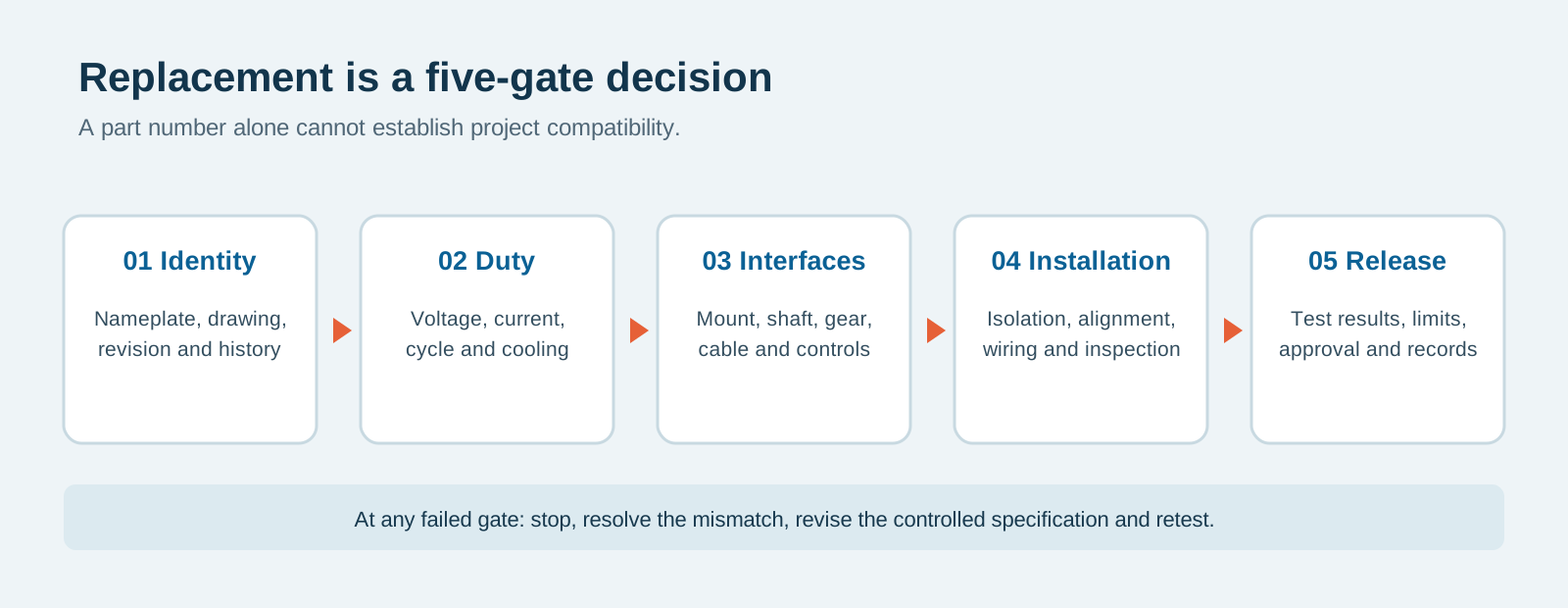
A replacement traction motor is acceptable only after its identity, operating duty, mounting and drive interfaces, electrical and control connections, protection requirements and test evidence have been matched to the actual locomotive and mine. A similar power rating or frame size is not enough. Freeze the existing configuration, document each difference, choose repair or replacement with the competent parties, then release the vehicle only against approved project criteria.
What is the first defensible replacement decision?
Identify the failed or obsolete motor and the complete traction chain before searching a catalogue. Record locomotive identity, motor nameplate and drawing revision, supply system, controller or converter, gear ratio, mounting, shaft and coupling, cooling, protective devices and the route duty. A replacement may fit the available space but still run at the wrong speed, overload a controller, change axle loading or invalidate a protection arrangement. These are engineering questions, not sales synonyms for an equivalent motor.
Separate three decisions: return the existing motor to service after a controlled repair; install a like-for-like unit with verified revision equivalence; or redesign the motor and drive interface. The third path is a system change and needs wider review of controls, thermal duty, braking interaction, drawings, spare parts and approval. The manufacturer, mine owner and competent electrical and mechanical engineers should agree which path applies before work starts.
| Decision | Evidence needed | Do not infer |
|---|---|---|
| Repair existing unit | Failure cause, repair scope, original specifications, test and traceability plan | That a rewind restores every original rating or hazardous-area approval |
| Like-for-like replacement | Part/revision cross-reference and all mechanical, electrical and duty interfaces | That matching power or outside diameter proves interchangeability |
| Changed design | Controlled change request, system calculations, risk review and acceptance plan | That the old locomotive approval automatically extends to the new drive |
Which existing-machine facts must be frozen?
Build a baseline pack from the nameplate, original drawings, motor and vehicle serial numbers, wiring diagrams, controller settings, installation photographs, service records and actual operating duty. Confirm whether the installed machine is DC, converter-fed AC or another specified type. Record rated values with their duty definition, not as loose numbers. Include direction of rotation, terminal arrangement, sensor connections, insulation and cooling method, enclosure and any declared hazardous-area construction only when supported by original documentation.
Ask maintenance for the failure history and operating symptoms: overheating, bearing damage, repeated insulation faults, water ingress, brush or commutator issues where applicable, abnormal current, vibration or changed gear noise. A failure that originated in the converter, gearbox, cable, rail return or operating duty can destroy the new motor too. This baseline prevents the procurement team from buying a part while the root cause remains active.
Which standards may apply, and where are their boundaries?
Do not write an RFQ that simply says compliant with all motor standards. The public IEC description for IEC 60349-2:2010 covers electronic converter-fed AC motors used on electrically propelled rail and road vehicles and frames testing against a specified duty. The IEC description for IEC 60034-1:2026 explicitly excludes rotating electrical machines for rail and road vehicles and points to the IEC 60349 series. The actual motor type, vehicle, jurisdiction, contract and approved edition determine the applicable test basis. These public descriptions are scope checks, not a substitute for the paid standards or a project compliance assessment.
For repair, IEC 60034-23:2019 describes a generic rotating-machine repair framework and expressly notes additional requirements may be agreed for traction motors. Its public scope says it does not supersede IEC 60079-19 for equipment used in explosive atmospheres. IEC 60079-19:2025 itself has a defined service-facility and Ex-equipment scope. A mine's hazardous-area status, the actual equipment marking and competent approval route must therefore be checked rather than assumed from the words underground or electric.
Engineering note: Use current editions and the original equipment documentation. This article does not certify any motor or prescribe universal test values.
How should the mechanical and electrical interfaces be checked?
Create a signed interface matrix rather than a single dimension drawing. Mechanically verify the envelope, fixing pattern, datum surfaces, shaft size and key or spline, coupling, gear mesh, bearings, lubrication access, lifting points, weight and cable clearance. Check how the motor is supported relative to the gearbox, axle and frame; a small difference can affect alignment, vibration, maintainability or a constrained underground removal path. ABB's locomotive-motor material is a supplier example of why suspension, gearbox and bearing choices follow duty, not proof that its arrangement fits this mine locomotive.
Electrically compare supply type and operating range, winding/terminal identification, cable size and route, protective earth, controller or converter parameters, feedback devices, temperature sensors and permitted starting, braking and regenerative states. Test the entire chain from supply through controls to the motor and drive, including failure indications. A controller setting copied from a previous motor should be treated as an unverified input until the new combination has been approved and tested.
| Interface | Record from existing vehicle | Supplier must return |
|---|---|---|
| Mechanical | Mount datum, bolts, shaft, gear/coupling, mass and removal route | Dimensioned drawing and deviations |
| Electrical | Supply, duty, terminals, cables, protection and earthing | Connection diagram and compatible operating limits |
| Controls | Converter/controller revision, sensors, feedback and fault logic | Parameter and integration changes |
| Environment | Cooling, water/dust exposure and classified-area documents | Documented construction scope and exclusions |
| Evidence | Old test reports, fault record and mine release rules | FAT/site checks and record format |
When is repair preferable to replacement?
A repair can preserve known vehicle interfaces when the original design remains suitable and the failure is local, but it is not automatically faster or safer. Ask for inspection findings, likely cause, repair scope, replacement components, winding or insulation work where relevant, dimensional restoration, balancing, test sequence, traceability and warranty boundary. If the failure mechanism is unknown, obtain a diagnosis before repeating the same repair. If original drawings, materials or approvals are missing, the repair path may carry more uncertainty than a documented replacement.
Replacement can reduce dependence on obsolete parts, but any design difference may transfer work to gearing, converter settings, cable routing, thermal management, drawings and training. Compare lifecycle evidence, not only purchase price: repair time, installation outage, repeat-failure exposure, spare unit strategy, support horizon and the cost of proving a changed configuration. A repair-or-replace decision should identify who owns each changed interface and who signs the return to service.
What is the controlled installation and acceptance flow?
Plan work around the mine's approved isolation and lifting procedures. Protect the vehicle from unintended movement, identify the motor and all connected circuits, record the as-found condition, and preserve mating parts for inspection. A qualified team should confirm mechanical fit and alignment, fastening, lubrication, terminal identification, insulation/protection checks and cable restraint against approved documents. Do not invent a torque, insulation threshold or run-in duration from a generic online article; these values belong to the actual equipment and project method.
Acceptance should proceed through documented static checks, low-risk functional checks, controlled movement and loaded duty evidence as appropriate to the change. Record motor identity, test configuration, instruments, ambient and route conditions, expected criteria, measured results, abnormalities, corrective actions and authorized sign-off. Verify that controller faults and protective responses are understandable to operations and maintenance. A passing workshop test alone does not prove the motor/locomotive combination on the mine's route.
- Freeze vehicle and motor baseline, failure history and applicable documents.
- Approve the repair or replacement scope and interface matrix.
- Complete safe isolation, removal, mating-part inspection and installation.
- Perform specified static, functional and route-duty checks under a controlled method.
- Close defects, update drawings and spares, then obtain formal release authority.
What should the motor replacement RFQ include?
Send the old motor and locomotive identification, failure description, nameplate and controlled drawings, photographs of the installed interfaces, drive/controller model and revision, supply details, train duty and route profile, ambient conditions, required hazardous-area documents where relevant, service history, expected outage and site access restrictions. Mark unknown values explicitly. Request a supplier deviation schedule, interface drawing, testing and handover documents, spare-parts list and defined technical support rather than a quotation for a nominally similar motor.
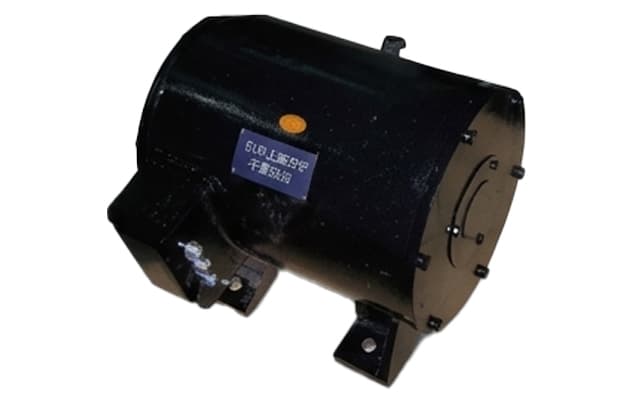
A useful offer will state what is verified, what is assumed, what must be measured on site and what remains outside the supplier's scope. The mine then compares offers on compatibility proof, acceptance work and lifecycle support. ShaoLi's motor category is a starting point for the configuration discussion; no catalogue image or generic guide is an engineering approval for a particular locomotive.
- Existing motor, vehicle and drive identities with revision history.
- Route duty, operating cycle, supply and ambient limits.
- Mechanical, electrical, control and protection interface schedule.
- Applicable project documents, mine rules and approval boundaries.
- Repair/replacement options, test plan, spare strategy and signed exclusions.
What must remain in the lifecycle record after release?
Archive the approved comparison, photographs, as-built connections and dimensions, controller settings, test records, serial-number trace, deviations and sign-off with the vehicle maintenance record. Update the bill of materials and stock code so a future technician does not re-order the obsolete revision. Capture the failure mechanism and actions on upstream equipment, not simply the replaced component. Where a project requires a controlled hazardous-area or conformity record, attach the actual approval documents and the exact motor configuration they cover.
Set a monitored proving period appropriate to the mine's maintenance system. Trend temperature, current, noise, vibration and fault events against the approved baseline where data exists; do not introduce universal alert thresholds from this page. A repeat anomaly should trigger an interface/root-cause review, not another automatic replacement. This closes the loop between procurement, installation and real duty.
Frequently asked questions
Can a motor with the same rated power replace the original?
Not by power alone. Duty, speed/torque behavior, voltage, cooling, mounting, shaft, gear, controller, protection and evidence must all be checked against the vehicle.
Does IEC 60034-1 automatically cover rail traction motors?
No. The public scope of IEC 60034-1:2026 excludes rail and road vehicle rotating machines and points to the IEC 60349 series. Determine the applicable edition and project requirements for the actual motor.
Is a workshop motor test enough to return the locomotive to service?
No. The controlled acceptance plan should also address installation, control/protection interfaces and the approved vehicle and route duty before release.
Should a failed traction motor be repaired or replaced?
Compare failure cause, original design suitability, repair traceability, obsolete parts, compatibility deviations, outage and acceptance evidence. Neither choice is universal.
Can a non-Ex motor be used in an underground mine?
Underground does not itself determine the classification. The mine's assessed environment, jurisdiction, original equipment design and applicable approvals decide what construction is required.
What must be supplied with a replacement quotation?
Provide motor and vehicle IDs, drawings, controller details, supply, duty, route, environment, failure history, approval needs and required tests. State unknowns rather than guess.
Who authorizes the vehicle after the motor change?
The mine's approved governance and competent project parties must define the test criteria, review evidence, resolve deviations and issue the return-to-service authority.
Sources & references
- IEC 60349-2:2010 scope summary
Public IEC summary for converter-fed AC traction motors; full standard is paid and applicability depends on the configuration.
- IEC 60034-1:2026 scope summary
Public IEC scope explicitly excludes rail and road vehicle rotating machines; full standard is paid.
- IEC 60034-23:2019 repair scope
Generic repair framework; its public scope notes additional traction requirements and does not supersede explosive-atmosphere rules.
- IEC 60079-19:2025 scope summary
Applies to specified repair and overhaul of Ex equipment; not every underground machine or manufacturer repair.
- ABB traction motor application note
Attributed supplier example for operating-duty and mechanical-interface considerations; not evidence for a ShaoLi configuration.
Turn the guide into a project requirement
Send the route, train, duty, power, environment and interface data. ShaoLi can review the requirement against relevant product and solution paths without treating a generic guide as a final design.
Request an engineering review