In-Depth Focus: The Strong Drive for Mining Decarbonization Across the Five Central Asian Nations, L
1.Kazakhstan: Overcoming "Green Barriers" as the 2060 Carbon Neutrality Strategy Reaches Substantive Implementation
As the largest mining nation in Central Asia, Kazakhstan has comprehensively advanced its 2060 Carbon Neutrality Strategy from a macro vision to a phase of substantive execution between 2024 and 2026. The acceleration of this policy framework is largely a direct response to the imminent challenges posed by the European Union's Carbon Border Adjustment Mechanism (CBAM).
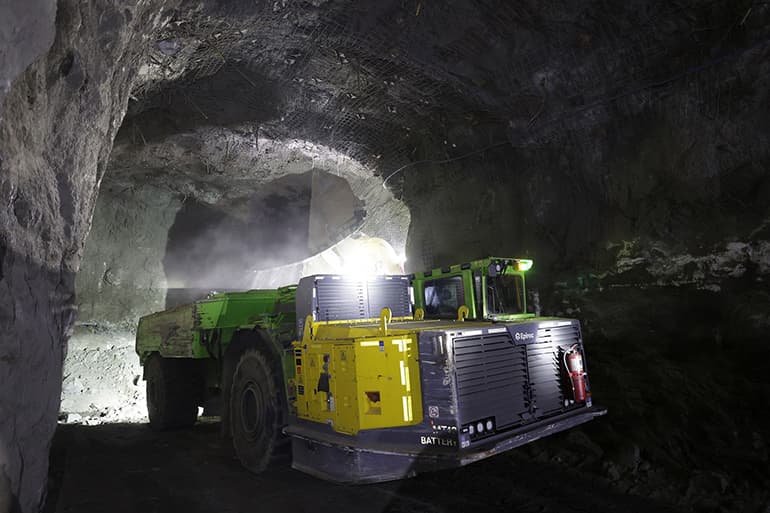
Given Kazakhstan's heavy reliance on mineral exports, the "green barriers" and potential carbon tariffs imposed by CBAM on high-emission products pose a direct threat to the international competitiveness of the nation's commodities. In response, the Kazakh government has instituted aggressive measures, mandating that major mining corporations, including Kazzinc, drastically reduce their carbon footprint in energy-intensive operations such as extraction and underground haulage. Traditional, high-emission diesel transport vehicles are facing stringent restrictions, making large-scale fleet electrification an absolute certainty.
2.Uzbekistan: Backed by International Capital, Aggressively Enforcing Green Directives for Mining Modernization
Concurrently, Uzbekistan has taken decisive strides in the green transition of its mining sector. In recent years, state-owned mining giants—exemplified by NMMC (Navoi Mining and Metallurgical Combinat)—have successfully secured substantial international green financing aimed at supporting sustainable development.
Uzbekistan's current policy enforcement focuses directly on the operational pain points faced by deep-shaft mining operations:
Phasing Out Energy-Intensive Internal Combustion Engines: Gradually retiring legacy internal combustion auxiliary haulage equipment, which suffers from severe emissions and complex maintenance in deep subterranean environments.
Tackling the Ventilation Cost Pain Point: Diesel equipment operating in confined underground spaces generates massive amounts of exhaust gas, resulting in extremely high energy consumption for mine ventilation systems. Electrification directly cuts this hidden, exorbitant cost.
Constructing Pure Electric Logistics Networks: Leveraging international funding, the country is aggressively introducing highly energy-efficient, pure electric underground transport networks. This not only fundamentally improves the subterranean working environment but also comprehensively elevates the overall energy efficiency and safety of mining operations.
3.Industry Bellwether: Mining & Metals Central Asia 2026 Sparks a "Carbon-Free" Procurement Boom
The rapid tightening of regional environmental policies has directly triggered an explosive demand for green, zero-carbon mining machinery. This market momentum is set to be fully unleashed at the industry's premier event this autumn.
Scheduled to take place from September 16 to 18, 2026, in Almaty, Kazakhstan, the 31st International Mining Exploration and Mining Equipment Exhibition (Mining and Metals Central Asia 2026) has been universally recognized by the global industry as the most vital bellwether for technology market entry and procurement in the region.
As decarbonization becomes the irreversible theme of Central Asia's mining sector, this exhibition will serve as the premier hub for the centralized display and commercial matchmaking of carbon-free mining equipment—particularly underground pure electric heavy-duty machinery, charging networks, and related ancillary infrastructure—across Eurasia and globally. For international mining machinery manufacturers, this represents not just an arena for cutting-edge technology competition, but an unmissable opportunity to capture the "green dividends" of Central Asia's mining industry for the next decade.